 2Q Solutions
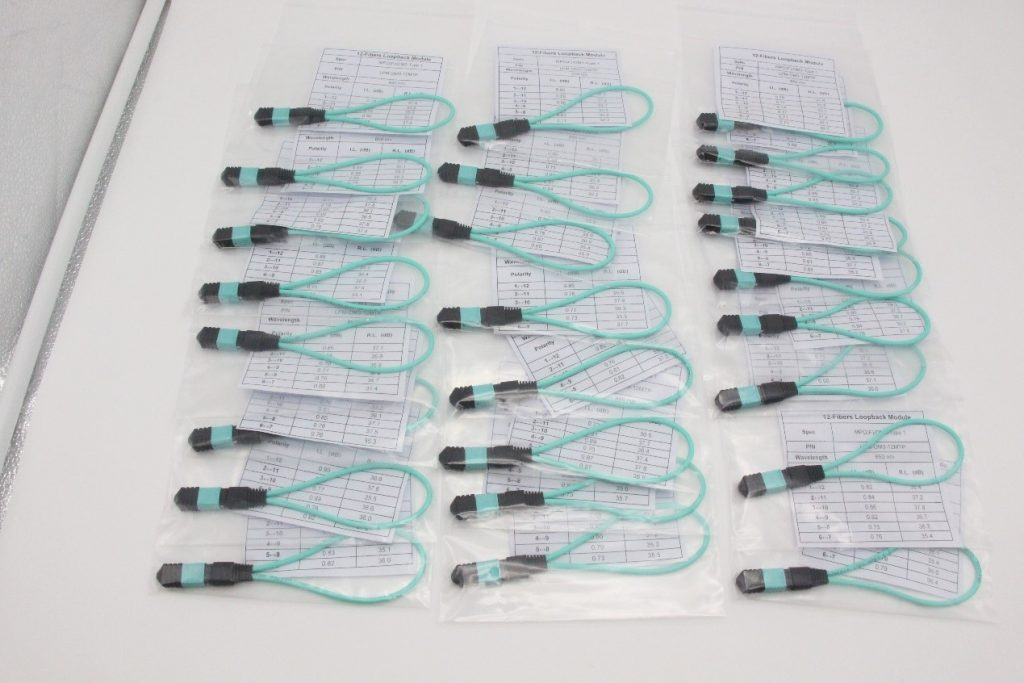
Anyone who has set up a data center or a fiber network knows that testing is not optional. A link that looks fine on paper can fail when real traffic arrives. One small device that helps engineers check equipment quickly is the MTP loopback. It looks simple, but it solves a real problem. This article explains what it does, where it is used and what to consider when choosing one, using the product information published by OMC.
What is an MTP loopback?
An MTP loopback is a test device for fiber optic networks that use MTP connectors. MTP stands for Multi fiber Push on and Pull off, a connector type that carries many fibers in a single plug. A loopback connects the transmit port of a device straight back to its own receive port, so the signal sent out is returned to the same equipment. This simulates a complete optical link without needing a second device at the other end.
OMC describes it as a way to test the transmit and receive functions of MTP transceiver interfaces. In other words, it lets an engineer check whether the equipment can send and receive light properly.
Why loopback testing is useful
Imagine you have just installed a transceiver in a switch and you want to know whether it works before connecting the real network. Without a loopback, you would need another working device and a cable run to the far end. With a loopback, you can test the unit on the bench or in the rack, in a few moments.
According to the company, a loopback lets engineers test transceivers and optical equipment without a live network connection, assess transmitter and receiver performance and signal integrity, and avoid complex setups. That saves time, especially during installation, commissioning and troubleshooting.
Where it is used
The company states that its loopback is used in telecom and datacom testing, including initial setup, routine maintenance and troubleshooting. It is also used to validate transceivers, particularly in 40G and 100G networks. These speeds are common in data centers, where many fibers carry parallel signals through MTP and MPO connectors.
A loopback also supports measurement of insertion loss and attenuation across a fiber link. Insertion loss is the amount of optical power lost when light passes through a connector, cable or device. Attenuation is the general reduction in signal strength. Both matter because every link has a loss budget, and exceeding it can cause errors. The company notes that the loopback helps with certifying installations and with troubleshooting.
Fiber types available
OMC lists three variants on its page. There is a single mode MTP loopback, an OM3 MTP loopback and an OM4 MTP loopback. Single mode fiber is typically used for longer distances and higher bandwidth links, while OM3 and OM4 are multimode types commonly used within buildings and data centers. You must choose a loopback that matches the fiber type of the equipment you are testing, because using the wrong type can give misleading results.
The page does not publish detailed numbers such as wavelength, connector count, dimensions or insertion loss values, nor does it describe polarity. If those details matter for your work, ask the supplier for a datasheet before ordering.
How to choose one
Start with the equipment. Which transceivers will you test, and which fiber type do they use? Match the loopback to that type. Next consider the connector. Check that the loopback uses the same connector style and gender as the port you are testing, since a mismatch can prevent a proper connection.
Then think about quality. A loopback is used again and again, so it should be well built. Ask the supplier how products are tested, and request data on insertion loss if your procedure depends on it. Ask also about lead time and quantities, since a team often needs several units.
Handling and cleaning
Fiber connectors are sensitive to dust and scratches. A speck of dirt on a connector end face can cause high loss or even damage. Always keep protective caps on when the loopback is not in use, clean the end face using proper fiber cleaning tools before each connection, and inspect it if you have a microscope. These habits protect both the loopback and the transceiver.
Safety note
Some optical transceivers emit light that can be harmful to eyes, even though it may not be visible. Never look directly into a transceiver port or a connector while equipment is powered. Follow your company’s safety rules and the manufacturer’s instructions.
About the supplier
OMC Group describes itself as a manufacturer of fiber optic products, and its website lists a range that includes MPO and MTP trunk cables, fanout cables, loopbacks, AOC and DAC cables. The company address given on its website is in Huizhou, Guangdong, China.
Summary
An MTP loopback is a small but valuable tool. It helps engineers check transceivers quickly, measure link performance and avoid unnecessary setup. Choose the right fiber type, confirm connector details, handle it with care and ask for specifications when you need exact numbers. With these steps, you can test with confidence and spend less time chasing faults.