 2Q Solutions
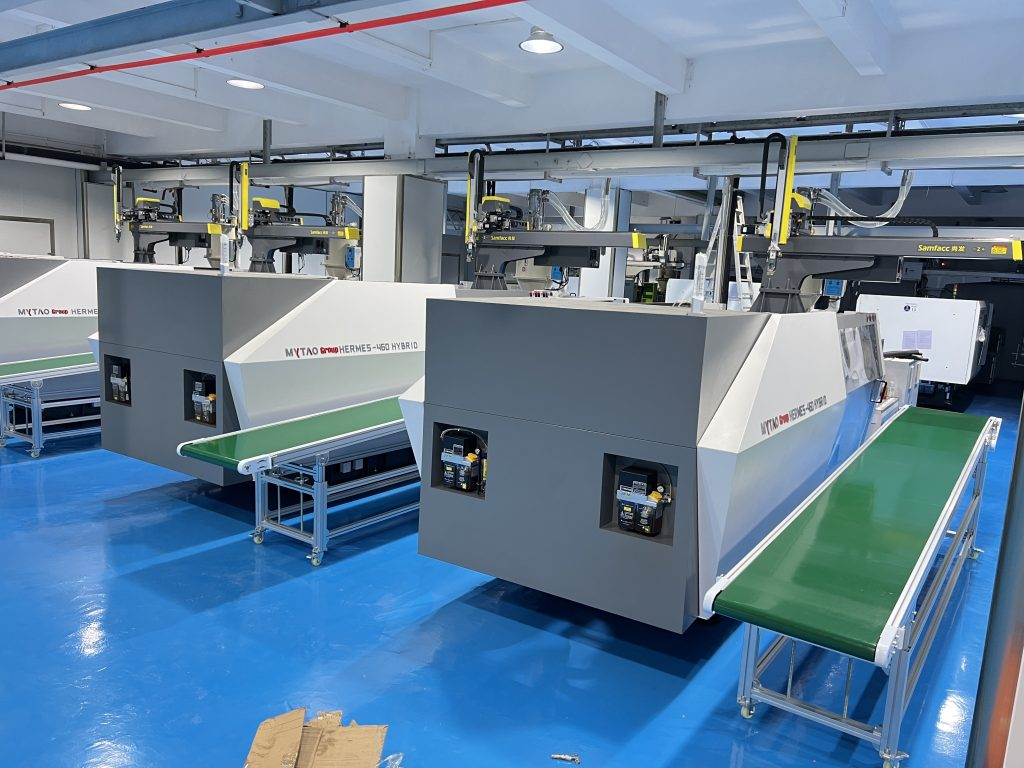
Walk into a plastic parts workshop and you will often see a machine making small items again and again, with a worker standing beside it to pick up each finished piece. This simple picture explains why robots became popular in molding. A robot can take the finished product out of the machine and place it neatly where it is needed. If your workshop uses a vertical injection molding machine, understanding what these robots do is a good first step toward smoother production.
A Quick Look at the Molding Cycle
Injection molding follows a repeating cycle. Plastic is melted and pushed into a mold, it cools and hardens, the mold opens, the part is removed, and the mold closes again. In a vertical machine, the mold halves open and close up and down, instead of sideways.
Most steps are handled by the machine itself. The part removal, however, is often done by hand. That is where a robot can help.
What the Robot Actually Does
A robot for this kind of machine is built to take the finished product, or the attached piece of material that is sometimes called a material head, out of the mold area. It then places it on a conveyor or in another set position. The robot repeats this movement every cycle, in the same way, without needing a break.
According to the manufacturer Samfacc, its arm robots for these machines come in single arm and double arm versions, and they are designed to put products or material heads onto conveyors. The robots also use an open type and frame structure, which the company describes as suitable for a range of industrial uses.
Why Removal Matters More Than It Looks
Taking a part out of a mold may sound like a small task, but it affects the whole process in several ways.
Timing. The next cycle cannot start until the mold area is clear. If a worker is slow, tired or distracted, the machine waits.
Consistency. A robot removes parts at the same moment and with the same movement. This helps the whole cycle stay regular.
Part care. Freshly molded parts can be warm and slightly soft. A controlled movement reduces rough handling.
Operator safety. Reaching into a mold area always carries some risk. A robot reduces how often a person needs to do it.
Where the Robot Fits Around the Machine
A robot for a vertical machine is usually mounted at the machine so that its arm can reach into the mold area when it opens. After taking the product, it moves away and drops or places it onto a conveyor. The conveyor then carries the parts to the next step, such as inspection, cooling or packing.
Because vertical machines are often chosen for small workshops with limited floor area, the way the robot is arranged matters. Samfacc states that its vertical robots are meant to take the finished product or material head from the end of the machine, which helps save placement space around it.
Products and Industries
The manufacturer states that its vertical robot systems can be used in several industries, including those making common plastic products and food processing. This is a reminder that the robot is only one part of the picture. What matters most is whether the robot suits the size, shape and weight of your product, and the layout of your machine.
Simple Questions to Ask First
- What exactly do I want the robot to take out: the finished part, the material head, or both?
- How big and how heavy is the product?
- Where should it go after removal?
- How much space is there around the machine?
- Does my mold need any special clearance?
- How will my operators be trained to use it safely?
Writing down the answers makes any discussion with a supplier much more useful, and it helps you avoid buying more than you need.
Safety Notes
A robot does not remove the need for safety rules. Moving arms and molds can still cause injury, so guards, stop buttons and clear instructions are still necessary. Never place hands in the working area while the machine or robot can move, and follow the manufacturer’s manual at all times.
Learning More
If you want to see what is on offer, take a look at the page for a vertical injection molding machine and read the descriptions of the robots made for it. Then compare them with the questions above.
Final Thoughts
A robot does not change what a molding machine makes. It changes how smoothly the work flows around it. By taking over the repeated task of removing parts, it can make cycles more regular, reduce risk for workers and keep a compact workshop organised. Understanding this simple role is the best way to decide whether automation fits your business.