 2Q Solutions
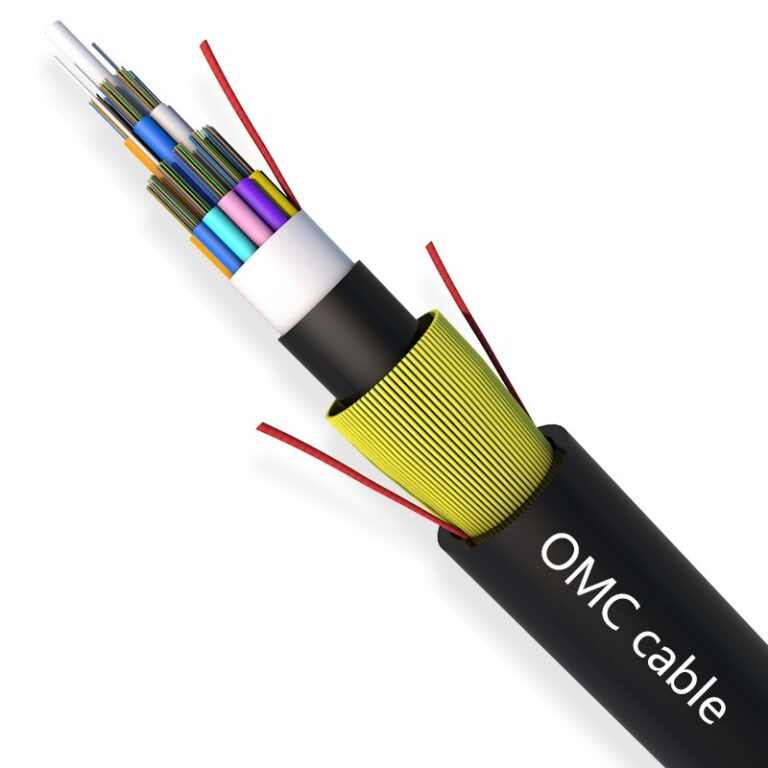
Not every fiber network can be buried underground. In rural areas, across rivers, along rough ground or beside existing power lines, digging trenches may be slow, costly or simply impractical. In those places, overhead cables are a common answer, and one type stands out because it needs no extra support wire. It is called an ADSS cable. This article explains what it is, why it is used and what to keep in mind, drawing on the guide published by OMC Cable.
What does ADSS mean?
ADSS is a type of optical fiber cable designed for aerial installation, meaning it is hung between poles or towers. The important word is self supporting. According to OMC’s guide, an ADSS cable can be used for overhead installation without the need for additional supporting structures. Ordinary aerial fiber often needs a separate steel messenger wire to carry its weight. A self supporting cable carries itself, thanks to its lightweight construction and specialized materials.
The term is commonly understood to mean all dielectric self supporting, which means the cable contains no metal parts. That is a useful property near high voltage power lines, because a non metallic cable does not conduct electricity in the same way as a metal one.
Benefits listed by the company
OMC describes several advantages.
The first is easier installation. Because no extra support structures are needed, the guide says material costs fall and deployment time becomes shorter.
The second is durability. The cables are described as built to handle extreme temperatures, high winds, ice buildup and heavy rain. Overhead cables face weather directly, so this is an important point.
The third is cost over time. The guide says that initial costs may be slightly higher than for traditional cables, but lower maintenance costs make them more economical in the long run. This is the kind of comparison every buyer should check against their own project, since local labor, terrain and pole conditions all change the result.
The fourth is scalability. The guide says the network can be expanded to meet growing bandwidth demand without major new infrastructure.
The fifth is sustainability. The company says fewer supporting structures, long lifespan and less frequent replacement reduce environmental impact.
Where it is used
The guide names two main areas. The first is telecommunications, where ADSS provides fast and reliable data transmission over long distances, especially in rural and remote areas where underground cabling is costly or impractical. The second is power grid communications, where it supports communication between substations, grid control centers and other infrastructure, using installation on power lines.
Utilities often need a private communication network to monitor and control their equipment. Running fiber on the same poles or towers as the power lines can be an efficient way to do it, and a self supporting cable avoids adding extra hardware.
What the guide does not say
It is worth being clear about what is not published. The guide gives no technical specifications, such as fiber counts, cable diameter, span lengths or load ratings, and it provides no installation procedures. Those details matter a great deal for ADSS, because the cable must be matched to the span between poles, the expected wind and ice loading and the electrical environment of the line. Any real project needs a proper design based on manufacturer data.
Points to consider before you buy
Start with the route. How long are the spans between poles, and what is the terrain like? Longer spans place more tension on the cable. Next think about the climate. Strong wind, ice and high temperatures all affect cable design, so tell your supplier the local conditions.
Consider the electrical environment. If the cable will run along high voltage lines, ask the manufacturer about suitability for that voltage and how the cable should be positioned on the structure.
Think about fiber count and growth. Pulling a new cable later is costly, so choose a fiber count that allows for future needs.
Finally, ask about hardware. Self supporting cables use special fittings, such as tension clamps and suspension sets, which must be matched to the cable. Using the wrong fittings can damage the cable or cause failure.
Installation and safety
Installing aerial cable is skilled work, often carried out near live power lines. It should be done only by trained crews who follow the cable manufacturer’s instructions and local safety rules. Correct tensioning, sag control and careful handling during pulling are all essential.
Questions for your supplier
Ask for full datasheets that include span ratings, tensile strength, temperature range and fiber options. Ask for test reports and the standards the cable meets. Ask about delivery lengths, drum sizes and the availability of matching fittings. Ask about support during installation.
OMC lists its address in Huizhou, Guangdong, China, and states that it has served telecom carriers, internet providers and data centers worldwide.
Summary
ADSS cable gives network builders a way to run fiber overhead without a separate support wire. It suits long routes, remote areas and power line corridors. Its success depends on proper design, correct fittings and skilled installation, so gather accurate route data, ask for full specifications and plan the project with care.