 2Q Solutions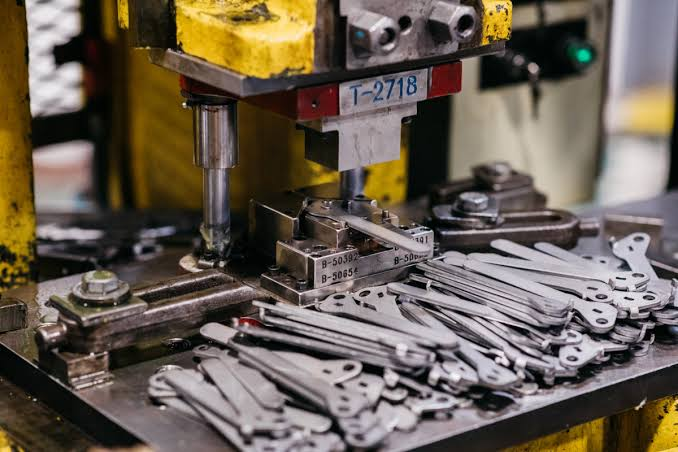
Metal stamping is one of those manufacturing processes that quietly shapes an enormous number of the products people use every day, from the brackets inside a car door to the small terminals inside a home appliance, yet very few people outside the industry actually understand how it works from start to finish. Walking through the process step by step makes it much easier to appreciate why precision at each stage matters so much for the final product.
What Metal Stamping Actually Involves
At its core, metal stamping is an industrial technique that uses specific stamping machines and precision dies to convert flat sheet metal into custom-shaped parts. Rather than relying on complicated machining processes that remove material to achieve a shape, stamping typically forms the metal through processes like bending, riveting, punching, and forming, which reshape the material directly using controlled force and precisely engineered tooling.
This distinction matters because forming processes tend to be significantly faster and more cost-effective at scale than machining processes that cut material away, which is exactly why stamping remains the dominant method for producing large volumes of consistent metal components across so many industries.
The Actual Sequence of Production
The production process generally follows a fairly consistent sequence, beginning with material preparation, where the correct metal sheet or coil stock is selected and readied for the stamping process. From there, die design becomes critical, since the precision dies used in stamping need to be engineered specifically for the part’s intended shape, size, and the mechanical properties of the material being formed.
Once tooling is ready, the actual stamping process takes place, forming the metal into its designed shape through the stamping press. Many parts then require secondary processes such as additional bending, riveting to join components together, or specific surface finishing, depending on what the finished part actually needs to do in its final application. Quality control runs throughout this entire sequence rather than being treated as a single final checkpoint, since catching a dimensional issue early in the process is far less costly than discovering it after a part has already gone through multiple additional processing steps.
Where Precision Really Gets Tested
Some of the more demanding aspects of the metal stamping manufacturing process involve techniques like riveting and complex bending, particularly when working with special shaped materials or multiple different metals joined together within the same component. Riveting performed inside the stamping press itself, rather than as a separate assembly step, reduces the number of manual operations needed and helps maintain tighter control over the joining quality, which matters significantly for components destined for automotive electronics, micro-motors, or precision machinery.
Bending capability matters just as much, especially for parts requiring complex geometries like multi-turn corners or slender curves. Producing these shapes reliably at scale requires both advanced forming technique and properly engineered tooling, since a die that works for a simple bend does not necessarily translate well to a more intricate multi-stage shape.
Handling Extremely Thin and Extremely Precise Parts
Modern stamping capability spans a genuinely wide thickness range, typically covering material from around 0.02 millimeters up to 3.0 millimeters in mass production settings, with even thinner trial production possible for specialized applications. This range allows a single manufacturing capability to serve both delicate, miniature electronic components and heavier structural parts, depending entirely on what a specific project requires.
Micro-bending in particular deserves mention as a more specialized capability, developed specifically for miniature components requiring extremely high accuracy. This kind of precision work supports integrated stamping, riveting, and complex forming operations within components small enough to fit inside compact electronic devices.
Why In-House Tooling and Automation Matter
A manufacturer that develops its own dies, fixtures, and production equipment in-house, rather than relying entirely on outside suppliers for tooling, generally has more control over both production timelines and quality consistency. Automation reduces manual handling, which helps stabilize production volume and keep costs more predictable across large orders.
Understanding this full sequence, from material selection through die design, forming, secondary processing, and continuous quality checks, makes it much easier to have an informed conversation with a manufacturer about what your specific project actually requires, rather than treating metal stamping as a black box process that happens somewhere out of view.
Read More at USA Times