
 Angela
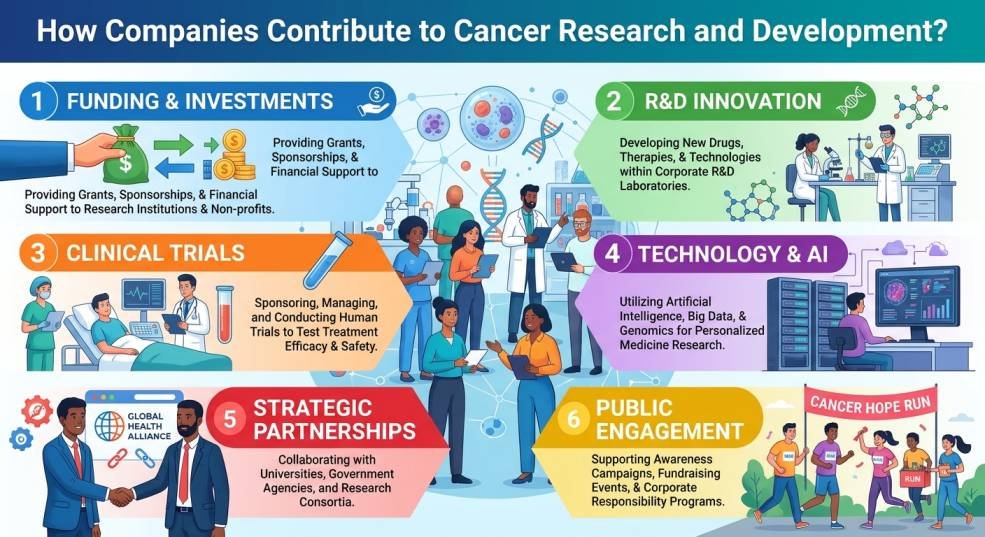
Cancer research has seen progress through the field of molecular biology as well as through the development of immunotherapies, genetic testing and targeted therapies. These treatments are being researched and developed by a variety of pharmaceutical and biotechnology companies as well as by research-based organizations. Their aim is to gain deeper insights into the development of cancer and to identify potential targets for therapy.
Instead of only concentrating on one type of cancer treatment, the cancer research industry is moving in many different directions, exploring various technologies needed to address the tumor variability that exists within different cancer types. Research is facilitated by a growing network of cancer researchers, health care providers, diagnostic and research-oriented companies from the pharmaceutical and biotechnology industries.
The Growing Role of Pharmaceutical and Biotechnology Companies
Research by leading oncology companies, large pharmaceutical organizations, as well as smaller and biotechnology companies contributes to the development of potential cancer treatments across the oncology research landscape. These organizations identify potential targets for new medicines, develop them in laboratories, and evaluate them through preclinical studies. Many investigational therapies are subsequently assessed in clinical trials to evaluate their safety and effectiveness in patients.
Many programs focus on complex types of cancer such as leukaemia and solid tumors. Researchers look to understand the way cancer cells grow and resist cell death, as well as how they spread from one part of the body to another and how they react to current treatments. Understanding the characteristics of cancer types helps researchers identify potential targets for new treatments.
It takes time to bring an investigational medicine from the early stages of research in the lab through clinical trials and, if approved by regulatory authorities, to market. Not all medicines under investigation will progress through every stage of development. Those that do must be supported by evidence relating to their safety, efficacy and appropriate use.
Immunotherapy Research and Advances in Cancer Treatment
Much of modern cancer research is focused on immunotherapy. There are many different immunotherapies in development, but they generally work by attempting to assist the body’s natural defenses in recognizing and destroying cancer cells. Unlike conventional cancer treatments that directly target cancer cells, immunotherapies work through the immune system to produce an anti-tumor response. Many different approaches to immunotherapy are currently under investigation by companies in the cancer research sector, including therapies targeting immune checkpoint proteins (e.g. PD-1, PD-L1, CTLA-4), as well as therapies utilizing engineered immune cells and therapeutic cancer vaccines.
CAR-T cells represent an important area of immunotherapy research, allowing T-cells to recognize and target cancer cells. T-cells are taken from a patient, modified in the lab to recognize a specific antigen, and then returned to the patient. These approaches have been evaluated in clinical studies, primarily for blood cancers, but are also being investigated for the treatment of solid tumors. For solid tumors, additional barriers to effective immune responses exist, including tumor-related changes in the environment in which cancer cells grow, as well as mechanisms that suppress immunity.
Precision Oncology and Personalized Medicine
There is also growing interest in the field of precision oncology or personalized cancer research and the development of cancer medicines that are matched to a tumor’s specific genetic and molecular features.
Cancer cells are characterized by genetic alterations that enable them to grow and survive. By performing genomic sequencing and biomarker analysis, researchers can identify the molecular profile of a patient’s tumor and investigate potential treatment options for that individual.
Research programs aim to establish which targeted therapies may be suitable for specific tumor characteristics and thus move beyond the conventional view of cancer based solely on its location.
Research also examines the selection of treatments based on genetic alterations in tumors of different origins (e.g. breast cancer, lung cancer, etc.) to determine how molecular profiling can support treatment decisions in oncology and the development of new targeted therapies.
Antibody-Drug Conjugates and Targeted Therapies
Antibody-drug conjugates (ADCs) for cancer therapy consist of a monoclonal antibody that is covalently attached to one or more therapeutically active drugs via a linker. The antigen-recognizing antibody portion of the ADC selectively binds to specific antigens on the surface of cancer cells. The antibody binds to a specific target expressed on the surface of cancer cells or within cancer cells. A drug is chemically attached to the antibody via a linker, and after the antibody binds to the target, the drug can be released and delivered into the cancer cells, where it is intended to act.
Research is ongoing into the various antibody targets, linkers and drugs that can be used to develop ADCs for different cancers. Other approaches to targeted cancer treatment include bispecific antibodies, which are designed to target two different entities, and small-molecule inhibitors, which can block specific proteins involved in cell growth and survival. Research into these approaches continues to examine how different types of cancer medicines, including antibody-drug conjugates and bispecific molecules, can be developed and evaluated.
Research into Blood Cancers and Solid Tumors
In addition to studying individual diseases such as leukaemia, lymphoma and multiple myeloma, cancer research companies are also exploring treatments for specific types of solid tumors, including lung cancer and breast cancer.
Blood cancer research aims to uncover the genetic and molecular causes that lead to the proliferation of abnormal blood cells. It currently includes the development of targeted therapies, immunotherapies and combinations of different treatment approaches.
Solid tumors are studied to understand their biology, identify molecular changes and examine the interaction of cancer cells with their environment. Oncology research is largely conducted through disease-specific studies and corresponding clinical trials. Results obtained in one cancer type cannot automatically be applied to another cancer type.
The Importance of Clinical Trials and Research Partnerships
Cancer treatments are evaluated in patients through clinical trials. These trials aim to assess safety and determine appropriate dosage levels for new treatments. They also investigate whether a treatment produces a therapeutic effect. Early-stage trials are used to assess the safety of a treatment and determine appropriate doses. Later-stage trials examine evidence of treatment benefits compared with other treatments currently available and assess whether the side effects are acceptable.
Additional cancer research is also conducted through partnerships involving pharmaceutical companies, academic institutions, hospitals, biotechnology companies and diagnostic laboratories. Specialized expertise, laboratory facilities, patient populations and clinical research networks are among the resources available through partnerships with research and other institutions.
What Lies Ahead for Cancer Research?
In the foreseeable future, cancer research in the field of oncology will continue to investigate new forms of treatment using immunotherapy, precision medicine, cell and gene therapy, and targeted drug delivery, as well as new approaches to molecular diagnostics. Many leading oncology companies continue to invest in research focused on artificial intelligence, advanced analytics, and innovative technologies that may support drug discovery, target identification, and the analysis of complex cancer datasets. Even promising approaches must undergo rigorous clinical testing to evaluate their safety and efficacy, as well as applicable regulatory review and approval processes.
Cancer research programs and work in oncology cell and gene therapy continue to contribute to scientific understanding of cancer, including its diagnosis and treatment, through ongoing scientific investigation and collaboration. Progress in cancer research involves the combined efforts of pharmaceutical developers, biotechnology researchers, healthcare providers and leading scientific institutions worldwide.
Disclaimer: This article is intended to provide a general overview of developments in oncology research and development. It is not intended to promote or recommend any specific treatment, product, or company. Information regarding investigational therapies reflects ongoing research and should not be interpreted as evidence of safety, efficacy, or regulatory approval. Readers are encouraged to consult healthcare professionals for the most current information.