 Backlinks Hub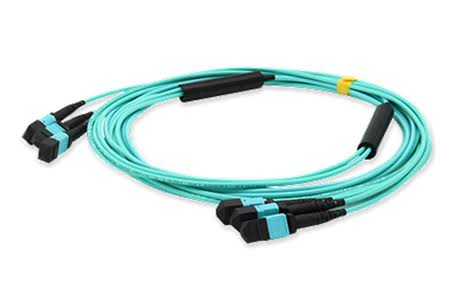
Modern data centers and telecom networks are moving more data through smaller spaces than ever before, and traditional single-fiber connections simply can’t keep up with that density. This is where an MPO trunk cable earns its place as one of the most important components in high-speed fiber infrastructure — packing dozens of fiber connections into a single, manageable cable run.
What Is an MPO Trunk Cable?
MPO stands for Multi-Fiber Push On, a connector type designed to terminate multiple fibers — commonly 8, 12, 24, or more — in a single compact interface instead of one connector per fiber. An MPO trunk cable takes that connector technology and applies it to long-distance cable runs, allowing dozens or even over a hundred fibers to be routed, tested, and managed as one unit rather than a tangle of individual jumpers.
This matters because every extra connector in a network run adds both installation time and potential points of failure. By consolidating many fibers behind a single push-on connector, an MPO trunk cable dramatically simplifies both the physical cabling and the day-to-day management of a high-density fiber network.
Where MPO Trunk Cables Are Used
Data Centers
Data centers are the most common home for MPO trunk cabling. As server racks and switch fabrics scale, the ability to run high fiber counts through structured, pre-terminated trunks — rather than field-splicing or connectorizing hundreds of individual fibers on-site — saves enormous amounts of installation time and reduces the risk of human error during deployment.
Telecommunications Networks
Telecom providers rely on MPO trunk cables to expand and manage large fiber networks efficiently, particularly where multiple fibers need to travel the same physical path between distribution points, central offices, or equipment cabinets.
Space-Constrained Installations
Because an MPO trunk cable consolidates so many fibers into one jacket, it’s especially useful in cramped conduit runs, overhead cable trays, or dense equipment rooms where routing dozens of separate cables simply isn’t practical.
Key Advantages of MPO Trunk Cable
High bandwidth, low latency. Consolidated multi-fiber connections support the high-throughput, low-latency demands of modern data transmission far better than piecemeal single-fiber runs.
Faster deployment. Pre-terminated, factory-tested trunk cables can be installed and connected in a fraction of the time it takes to splice or connectorize fibers individually on-site.
Reduced connector count. Fewer physical connectors along a fiber path means fewer potential failure points and less cumulative insertion loss across a network run.
Scalable fiber counts. MPO trunk cables are available in a range of fiber counts to match project scale, from smaller patch-cord-style trunks up to high-count cables built for large-scale deployment, often supplied on cable drums for long-distance runs.
Choosing the Right MPO Trunk Cable
Fiber Count and Configuration
Fiber counts typically scale from 8 or 12 fibers per MPO connector up to much higher totals in a single trunk — some high-density deployments call for cables carrying dozens of MPO connectors in a single run. Matching fiber count to actual network requirements, with some room for future growth, avoids both under-provisioning and unnecessary cost.
Armored vs. Standard Construction
For outdoor runs, underground conduit, or environments with a higher risk of physical damage, an armored MPO trunk cable adds a protective layer that resists crushing, rodent damage, and general wear — a worthwhile upgrade anywhere the cable isn’t confined to a controlled indoor environment.
Repeatability and Interchangeability
Because MPO connectors mate as a complete unit, connector quality has an outsized impact on performance. Trunk cables built with high repeatability and interchangeability standards maintain consistent, low-loss connections even after repeated mating cycles — something worth verifying with any supplier before a large deployment.
Packaging for Long Runs
For longer cable runs between buildings or across large facilities, trunk cables supplied on drums make handling and installation considerably easier than working with cable in coiled bulk form, particularly for cable-pulling crews working over long distances.
Why Manufacturing Quality Matters
An MPO trunk cable is only as reliable as its weakest connector. Cables built with high-quality raw materials, precise factory termination, and thorough testing hold up far better under real-world conditions — vibration, temperature swings, repeated connection cycles — than cheaper alternatives that may look identical on a spec sheet. Working with a manufacturer that offers technical support, installation guidance, and responsive troubleshooting also matters once a system is deployed and any issues need to be resolved quickly.
Final Thoughts
As data centers and telecom networks continue pushing more traffic through denser infrastructure, the MPO trunk cable has become a foundational tool for scaling fiber connectivity without multiplying installation complexity. Choosing the right fiber count, construction type, and connector quality for a given deployment goes a long way toward building a network that performs reliably for years, rather than one that needs troubleshooting the moment traffic starts to climb.