 IQnewswire

A Montana DUI charge threatens both your budget and your driving privileges. A lawyer’s initial quote may omit substantial work from the stated amount.
Answer: Compare Montana DUI defense fees by checking the written billing terms against the case stages they cover. Check the included evidence review, too. Ask about motions and trial preparation, then check the staffing and communication terms. The total can change if you pay separately for trial work or license proceedings. Test-related work should include reviewing whether officers followed National Highway Traffic Safety Administration (NHTSA) procedures.
What can a quoted DUI fee leave out?
A quote may omit license proceedings and the work needed for a trial. Legal Cost Guides’ 2025 guide says flat fees are common for first-offense DUI representation and notes that lawyers may bill separately for trial and license-suspension hearings. A flat fee covers defined work; hourly billing charges you for the time the lawyer records.
Use a worksheet to separate the quoted legal work from charges you might pay separately. Ask the lawyer to walk through each category in the engagement agreement.
| Billing or scope item | Written terms to request | Potential extra charge |
| Flat-fee work | Exact tasks and endpoint | Later work requiring a new fee |
| Hourly work | Rates and billing increments | Time charged beyond an initial estimate |
| License proceedings | Hearing representation and filing duties | A separate agreement or hearing fee |
| Motions and trial | Motion hearings and trial preparation | Additional litigation fees |
| Outside expenses | Records and specialist costs | Charges paid separately to third parties |
Compare DUI defense fees by the work covered
Compare each proposal against the same expected work. Keep the proposed agreement in front of you while you work through these steps, and request written changes wherever the wording leaves a gap.
Step 1: Request the complete fee arrangement in writing
Request an engagement agreement that states the fee clearly before you authorize work. Ask what a flat fee covers and when you’ll owe another fee. For hourly billing, get the attorney’s rate and billing increment, which is the unit used to record time.
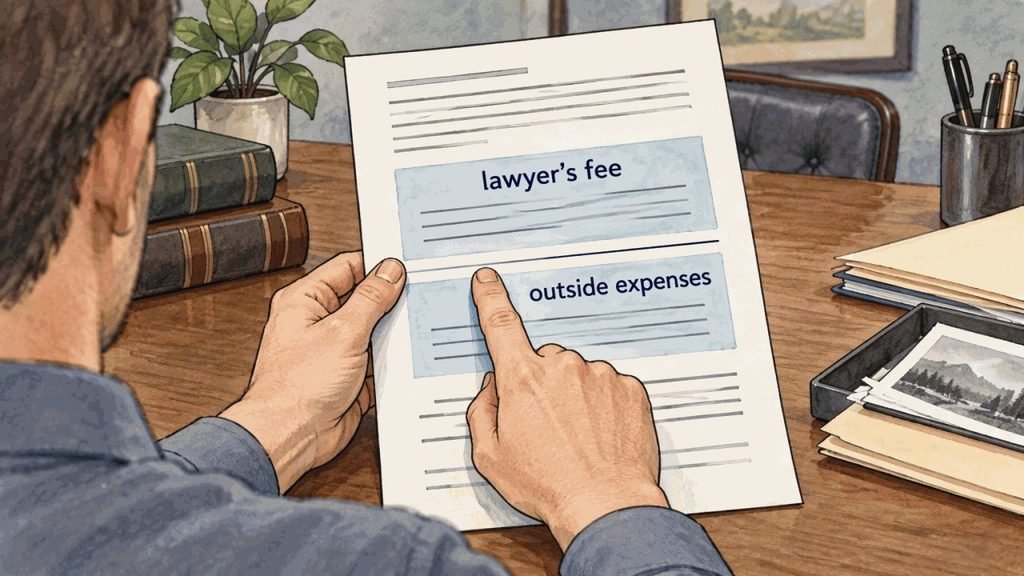
Ask how the lawyer applies an advance payment and when you’ll have to replenish it. The agreement should list the lawyer’s fee separately from outside expenses, such as records or expert analysis. Get the terms for ending representation and dealing with any unused advance payment.
Step 2: Match the fee to every expected case stage
Match the quote’s endpoint with the case stages your lawyer expects you’ll need. Ask counsel to identify the covered stages in the agreement, including sentencing if it applies. Don’t depend on a general promise of DUI representation.
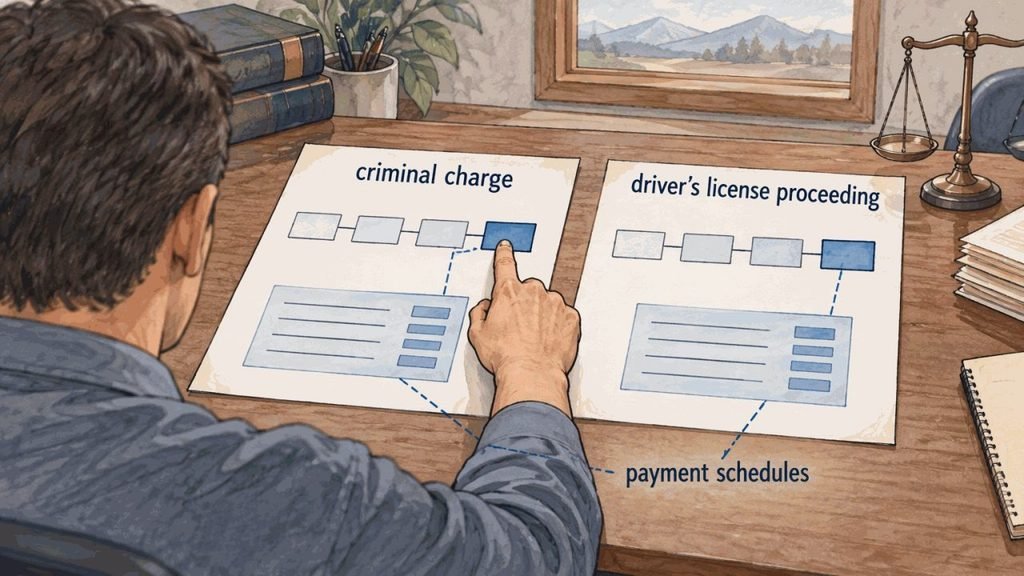
Counsel should state a separate scope of work for the criminal charge and any driver’s license proceeding. Get the payment schedules together if counsel proposes separate agreements. Ask who’ll track any deadline to request a hearing and whether representation covers filing the request.
Step 3: Inventory the evidence included in the review
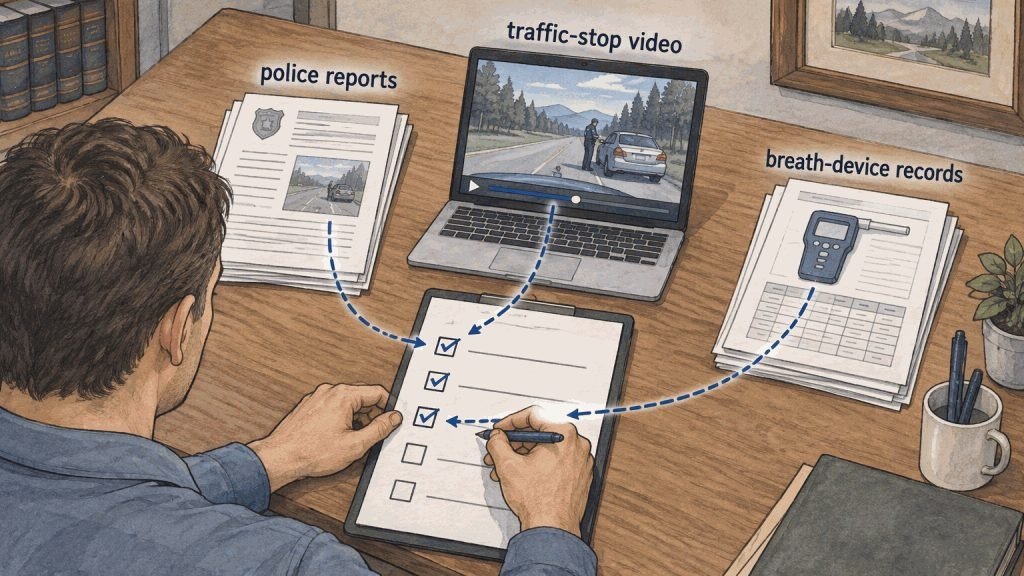
Inventory the evidence covered by the fee, and ask the lawyer to specify what they still need to obtain. Assess field sobriety test lawyer costs by asking each lawyer for a written commitment to examine police reports, traffic-stop video, breath-testing procedures, and field sobriety exercises.
Compare Montana field sobriety test defense fees by the work covered, not just the quoted amount. The cost depends on the evidence review and case stages included in the written quote.
The written proposal for field sobriety test defense should distinguish test-related review from motions and trial work. It should list outside expenses separately, too.
Ask whether the work includes obtaining recordings and checking breath-device records rather than relying on the officer’s summary. Point out any medical or mobility issues you’d like counsel to consider alongside the recorded exercises.
The Marijuana Herald reported on November 12, 2026, that the Montana Supreme Court ruled that a phlebotomist’s certification and hospital employment alone didn’t establish the required medical supervision for a THC blood draw. The objection came too late, so the conviction stood. Ask whether the fee includes examining blood-collection foundations and raising evidence objections on time.
Step 4: Confirm coverage for motions and trial preparation
Confirm whether the fee includes contested motions and the work required to prepare for trial. Ask the lawyer to explain in the agreement how initial legal analysis differs from drafting a motion and arguing it at a hearing. Find out when a trial-related payment comes due and whether you must pay before the court sets a trial date.
KXLF reported on September 2, 2026, that the Montana Supreme Court upheld a ruling suppressing blood evidence in a fatal-crash prosecution. The lower court had found no consent for a warrantless draw. Ask whether your fee includes evaluating consent and preparing a suppression motion if the facts support one.
Step 5: Verify staffing and terms for communication and consultations
Verify who will handle your case and how contact with that person is billed. Ask who’ll review the evidence and who’ll appear in court. Get the name of your contact for urgent questions and find out what response time to expect.
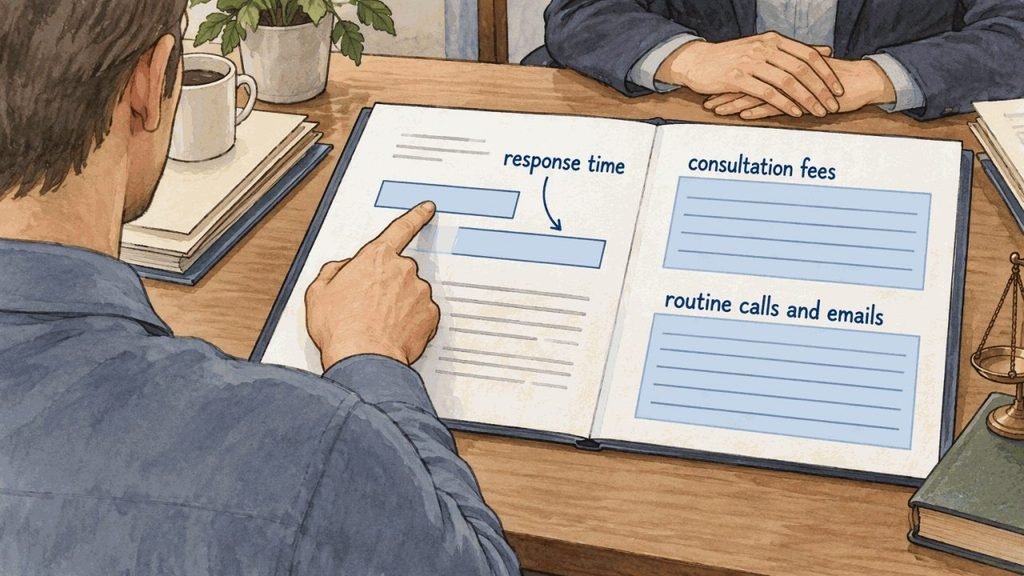
Ask the cost of a consultation and whether that payment counts toward representation. Get the lawyer to state any consultation fees in writing. Find out how the lawyer bills for routine calls and emails, too. A consultation appointment doesn’t establish when the attorney will start work on your case; ask the lawyer to put that starting point in the agreement.
Why does evidence-review scope affect the comparison?
Checking how an officer administered a test involves different work from reading the reported result. Ask for a quote that separates collecting evidence from examining the instructions and procedures recorded during the stop.
NHTSA describes standardized field sobriety testing as a battery of three tests officers have used for more than 40 years. Its 2023 SFST Participant Manual reports 91% accuracy for arrest decisions when officers use the battery with drivers whose blood-alcohol concentration (BAC) is 0.08 or higher. The manual credits that finding to Stuster and Burns, 1998.
The later results for each individual test use the same threshold. NHTSA’s 2009 SFST Participant Manual reports earlier laboratory findings using a 0.10 BAC threshold.
| Test | What counsel should examine | Later individual accuracy | Earlier laboratory accuracy |
| Horizontal gaze nystagmus | Administration of the eye-movement exercise | 88% (Stuster and Burns, 1998) | 77% |
| Walk-and-turn | Instructions and performance during walking and turning | 79% | 68% |
| One-leg stand | Instructions and balance during the exercise | 83% (Stuster and Burns, 1998) | 65% |
These findings describe test accuracy under the research conditions reported, not your likelihood of conviction. The evaluations used different BAC thresholds, so you can’t compare the columns head-to-head as though the conditions were identical.
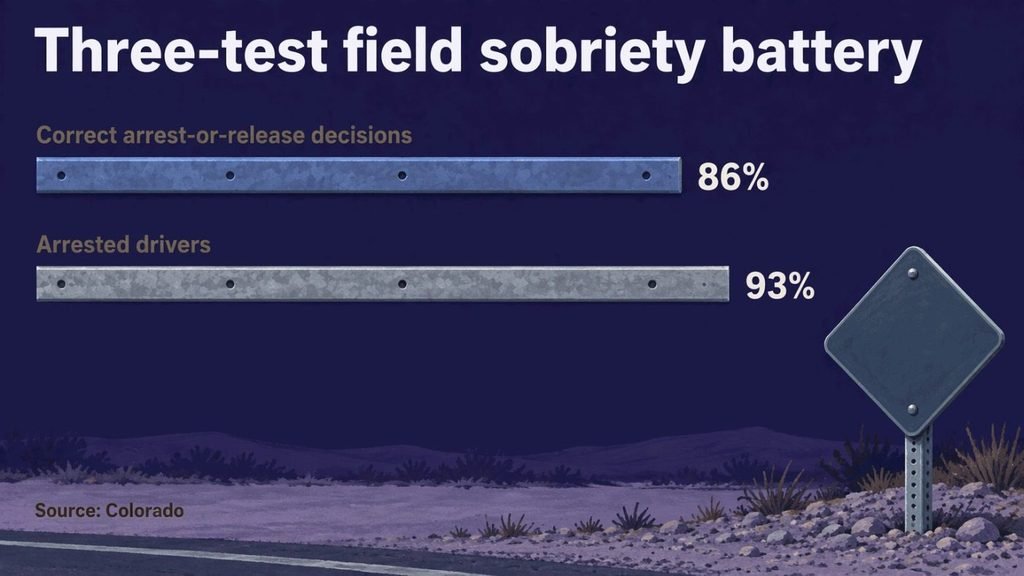
In a Colorado study summarized by NHTSA, the three-test field sobriety battery produced correct arrest-or-release decisions 86% of the time at a 0.05 BAC threshold, and 93% of arrested drivers had a BAC of 0.05 or higher. The finding is attributed to Burns and Anderson, 1995.
What should happen before you sign?
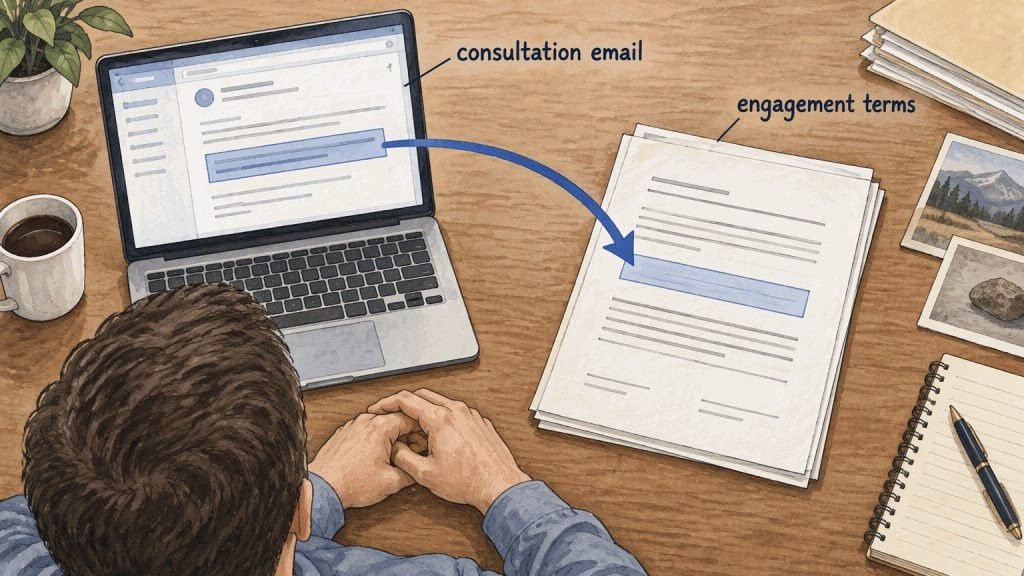
You should have a complete agreement that answers every question about exclusions and payment triggers. Check that the agreement names the attorney responsible for your case and spells out the communication expectations you discussed. Ask counsel to include in the engagement terms any important promise made only in a consultation email.
Send the same scope worksheet to each prospective lawyer and ask for a completed written quote. Compare the price against the work you’ll receive and clear up any remaining exclusions. Bring your court papers to your consultation.