 2Q Solutions
Glass is hard to cut well. It is brittle, so it chips, cracks and sometimes shatters when it is handled with the wrong method. Traditional cutting often leaves rough edges that need grinding or polishing afterwards. This is one reason many manufacturers now look at a glass laser cutting machine for jobs where edge quality matters. This article explains how this technology works and where it is used, based on the product information published by HS Laser.
What is a picosecond laser?
A picosecond is one trillionth of a second. A picosecond laser sends out extremely short bursts of light. Because each pulse is so short, the energy arrives before much heat can spread into the material around it. The result is a very small heat affected zone, which means less thermal damage near the cut.
HS Laser calls this a cold ablation process. On its product page, the company lists a pulse width of 10 picoseconds, measured at 1064 nanometers, and a repetition rate from single shot up to 8 MHz.
Why glass needs a different approach
Glass does not respond well to long, hot exposure. Heat creates stress, and stress creates cracks. Ultra short pulses avoid much of this problem. The company says its system gives burr free cuts, minimizes the heat affected zone and removes the need for polishing or grinding in many cases.
The company also describes the process as dry. It says no water cooling and no chemical additives are needed, and that this keeps the working area dust free and reduces expensive post processing.
What materials and thicknesses can it handle?
According to the product page, the system is engineered for sapphire, white glass and ultra clear glass. It is described as handling glass from 1 mm up to 25 mm in thickness. Another section of the page also refers to a range of 0.1 mm to 25 mm for ultra thin, tempered and sapphire glass. The page also compares methods and notes that picosecond cutting is best suited to thin and medium thickness glass, with the best results listed for 0.1 mm to 5 mm, while water jet cutting can handle much thicker glass.
This honest comparison is useful. It tells buyers that the machine is not the answer to every glass job, and that thickness is one of the first things to check against their own products.
Two laser sources in one machine
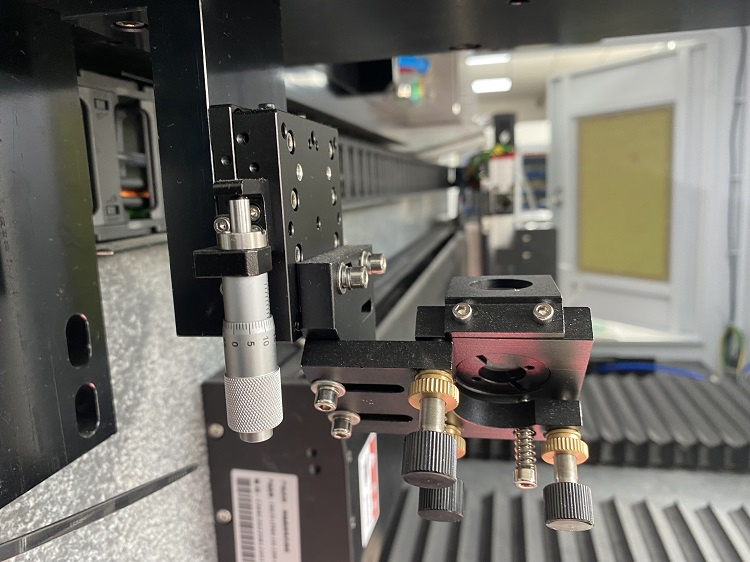
An interesting point on the product page is that the machine uses both a picosecond laser and an RF CO2 laser. The company explains that the picosecond laser handles the shaping and pre cutting, but for thicker glass it cannot cut all the way through in a single pass. For that reason an RF CO2 laser is used to complete the separation. The company suggests that an RF CO2 source of 100W or 150W works better for cutting out the glass.
Industries and applications
HS Laser lists consumer electronics, medical optics and automotive glass as target sectors. Specific examples on the page include optical lenses, smart wearable dials, automotive mirrors, medical instruments, camera lenses and luxury watch glass. The page also shows sample work, such as 3 mm glass with a color film at 406 by 508 mm, and 1.1 mm ITO glass.
Speed and accuracy figures
The company states a cutting speed of up to 500 mm per second, and describes its accuracy as micrometer level, quoting 1 micrometer. It also says the system works with CNC and robotic automation, and that it is suitable for mass production. As with any manufacturer’s claims, buyers should ask for sample cuts on their own glass and confirm results before placing an order.
Available models
The page lists three laser power options, 60W, 80W and 90W, with model numbers HS-Pi60, HS-Pi80 and HS-Pi90. The machine uses a single phase 220V power supply and a Bessel laser cutting head, and it weighs more than five tons, with a marble countertop on a welded plate bed. This heavy build helps keep the machine stable during precise work.
About the company
HS Laser is the brand of Shenzhen HS Technology Co., Ltd., which was founded in 2018. The company states that it focuses on the research, development and export of laser cleaning, welding, glass cutting and marking machines.
What to ask before you buy
Before choosing any machine, prepare a short list of questions. What glass types and thicknesses do you cut? What edge quality do you need? How large are your sheets? How many pieces per day? Will you need drilling as well as cutting? Send sample pieces to the supplier and ask for test cuts and photos. Check training, spare parts and after sales support.
Picosecond cutting is a serious investment, but for the right products it can bring cleaner edges, less waste and a smoother production line.