 2Q Solutions
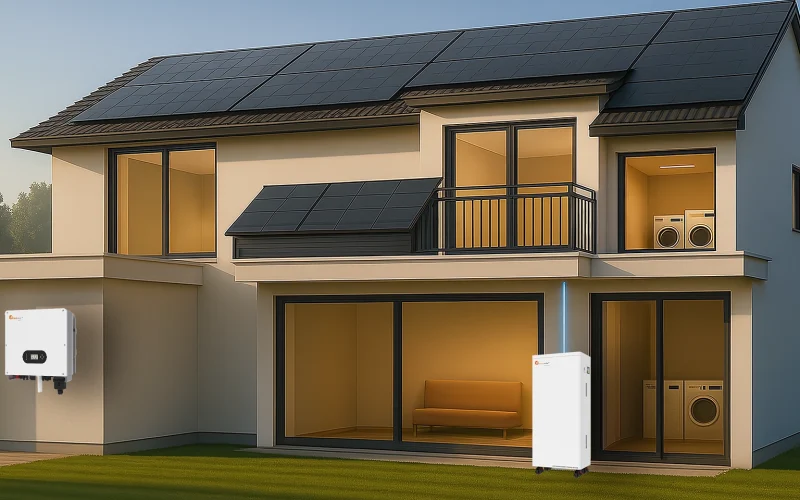
Solar panels get most of the attention when people talk about going solar, but panels only tell half of the story. The sun shines during the day, while many homes and businesses use a large share of their electricity in the evening or at night. That gap is exactly where storage comes in. Well chosen solar energy storage solutions let you keep the extra power your panels produce at midday and use it later, instead of letting it go unused.
In this article we look at how storage works in simple words, what a complete system usually contains, and what kinds of setups are available today.
How storage fits into a solar system
A basic solar system turns sunlight into electricity and feeds it straight to your appliances. Anything you do not use right away is either sent to the grid, if your local setup allows it, or simply not captured. A storage system adds a battery to the picture. Extra energy charges the battery during the day, and the battery supplies your loads when the panels are not producing enough.
For this to work smoothly you need more than a battery. You need an inverter that can manage the flow of power between panels, battery, loads and sometimes the grid. You also need software or a battery management system that watches the health of the battery and keeps it working within safe limits. Good solar energy storage solutions bring these parts together so they work as one system and not as a pile of mismatched products.
The main types of setups
Felicitysolar presents its energy storage offering in a few clear categories on its solutions page. These are balcony systems, residential systems, commercial storage systems, and commercial and industrial systems. Each one is aimed at a different scale of need.
A balcony system is the smallest option. It pairs a compact micro inverter with a lithium battery and is built for people who only have a balcony to work with. A residential system is designed for a full home, and the company lists a flexible residential option called the FLB series. For businesses there are hybrid inverters in the IVGM series, which the company describes as covering 3 kW up to 125 kW, so one product family can serve very different project sizes.
At the larger end, the company lists a 125 kW and 261 kWh liquid cooled system under the FelicityMatrix name, as well as a 125 kW commercial and industrial package and a 50 kW package that pairs a hybrid inverter with a high voltage LFP battery. These examples show how the same idea scales, from a small apartment to a factory floor.
Why batteries and inverters should be matched
One mistake buyers make is choosing the battery and the inverter separately, only by price. The two need to speak the same electrical language, meaning compatible voltage and communication. When a manufacturer designs them to work together, installation is simpler and troubleshooting is easier. This is one reason many buyers prefer to look at a complete solution page rather than single products, since the page shows which inverter and battery models are intended to be paired.
Support and tools that matter after the purchase
A storage system is not something you buy and forget. It is used every day for years, so the support behind it matters. On its website Felicitysolar lists a download center with user manuals and datasheets, a video gallery with installation and commissioning videos, and a service system that connects customers with its engineers. It also offers a system configuration tool where you enter some basic information and receive product recommendations, and an anti counterfeiting page where a 16 digit code can be used to check that a product is genuine.
The company also has a monitoring platform called Fsolar, which it describes as a way to monitor and manage solar energy from anywhere. Being able to see how much your panels produce and how much your battery holds helps you use energy wisely, and it makes problems easier to notice early.
Questions to ask before choosing
Before you pick any system, it helps to answer a few simple questions. How much electricity do you use in a typical day? Which devices must keep running if the grid goes down? How much roof or balcony space do you really have? Do you want to expand later? Smaller systems can be enough for lights, fans and a refrigerator, while larger loads such as air conditioners or workshop machines need much more power and capacity.
Also ask about documentation. A reliable supplier should be able to give you datasheets, manuals and clear installation guidance. Ask who will install the system, because even the best equipment can disappoint when it is installed poorly.
A practical way to start
If you are new to this, start by reading about the categories and matching your situation to one of them. Look at real project examples where they are available, compare the specifications, and note the questions you want to ask. Storage is a long term purchase, and a little research before buying usually saves a lot of trouble later.
Solar energy is only as useful as your ability to use it when you need it. With the right storage in place, the power your panels make during the day can keep working for you well after sunset.