World ranker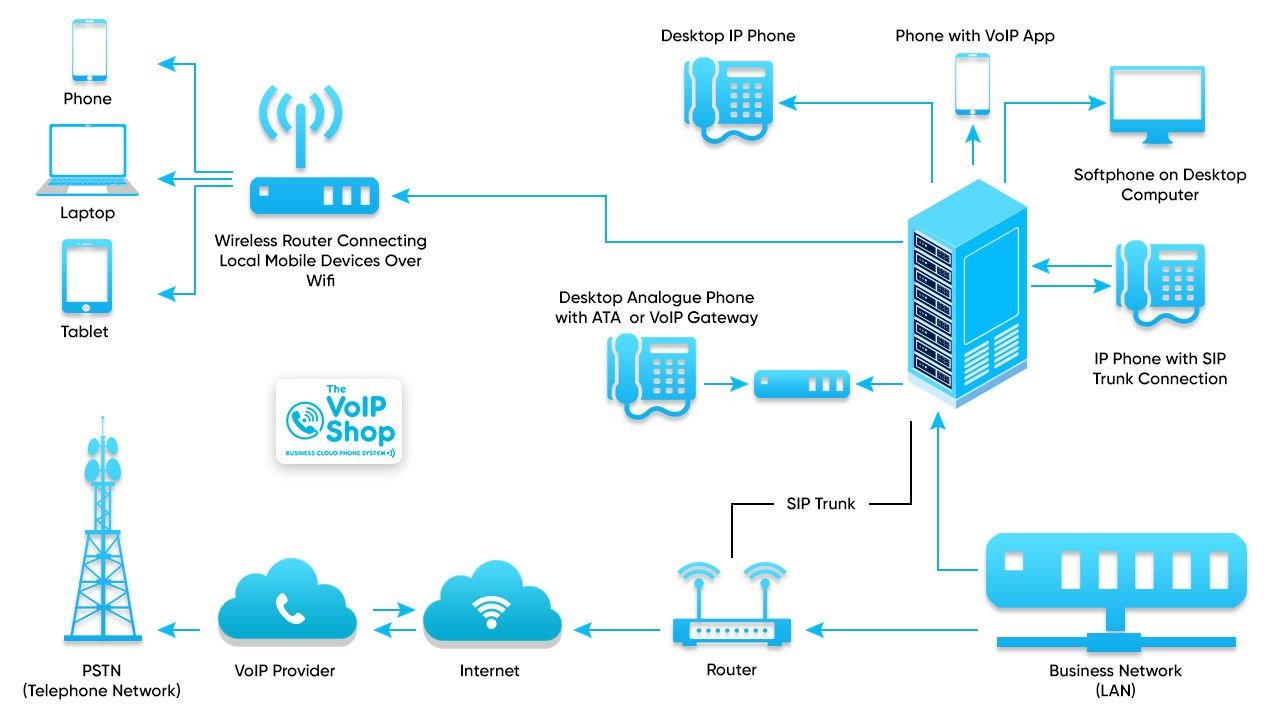
Businesses still depend on voice communication for sales, customer support, internal collaboration, appointment management, and many other day-to-day operations. But the way companies handle business calling has changed significantly. Traditional phone systems are increasingly being replaced by cloud-based communication infrastructure that is easier to integrate, scale, and manage.
That is where SIP trunking comes in.
SIP trunking allows businesses to connect their existing PBX or communications systems to the public telephone network through an internet connection rather than relying on traditional physical phone lines. For companies modernizing their communications stack, choosing the right SIP trunking provider can affect call quality, geographic coverage, integration options, security, scalability, and overall operating costs.
In 2026, the decision is becoming even more interesting because SIP trunking is no longer limited to conventional business telephony. Providers are increasingly connecting voice infrastructure with APIs, AI agents, real-time media streaming, and programmable communications.
Below, we look at some of the leading SIP trunking providers and explain why Telnyx SIP Trunking deserves particular attention from businesses and developers building modern voice systems.
What Is SIP Trunking?
SIP stands for Session Initiation Protocol. SIP trunking uses this protocol to establish and manage voice calls over an IP network.
Instead of maintaining a separate physical telephone line for every connection, a business can use SIP trunks to connect its PBX or communications platform to a telecommunications carrier.
A typical setup looks something like this:
Business PBX → SIP Trunk → Voice Carrier → Public Telephone Network
This approach can be useful for companies that want to keep their existing phone system while replacing traditional telephone connectivity with an IP-based alternative.
SIP trunking can support:
- Inbound and outbound business calls
- Existing IP-PBX systems
- Call routing and failover
- Geographic phone numbers
- Remote and distributed teams
- Contact centers
- CRM and business software integrations
- Voice applications and AI-powered calling
The important point is that SIP trunking is infrastructure. It can sit underneath a wide range of business communication applications.
What Should Businesses Look for in a SIP Trunking Provider?
Choosing a provider based only on the advertised per-minute rate can be a mistake. The cheapest headline price does not necessarily mean the best fit for a particular business.
Here are several factors worth evaluating.
1. Geographic Coverage
If your business operates across multiple countries, check whether the provider supports the destinations and phone numbers you actually need.
Look at local number availability, international calling, number porting, and regulatory requirements before committing.
2. Call Quality and Network Architecture
Voice traffic is sensitive to latency, packet loss, and network conditions. A provider’s network architecture and carrier relationships can therefore matter as much as its pricing.
3. PBX Compatibility
Your SIP provider should work with the PBX, softphone, contact-center platform, or communications software your organization already uses.
Compatibility documentation is particularly useful when you’re running platforms such as FreePBX, 3CX, or other SIP-compatible systems.
4. Security
Businesses should examine available encryption, authentication mechanisms, fraud controls, and compliance-related features.
Security requirements can be especially important for healthcare, financial services, government, and other regulated organizations.
5. Scalability
Your requirements may change as your company grows. A suitable provider should make it practical to add numbers, increase call capacity, expand into new markets, or connect additional applications.
6. Developer and API Support
For businesses building custom communication applications, APIs can be just as important as traditional SIP connectivity.
A provider that combines SIP, programmable voice, media streaming, and AI infrastructure can reduce the number of separate systems developers need to integrate.
At a Glance
- Best overall for programmable voice: Telnyx
- Best for communications APIs: Twilio
- Best for carrier-level infrastructure: Bandwidth
- Best for enterprise communications: Vonage
- Best for business communications and contact centers: 8×8
- Key factors to compare: Pricing, call quality, geographic coverage, security, PBX compatibility, scalability, and API support
- Best for AI voice applications: Telnyx
Best SIP Trunking Providers for Businesses in 2026
The best provider depends on your existing infrastructure, geographic requirements, technical capabilities, and communication goals. Here are several providers worth evaluating.
1. Telnyx
Best for: Businesses and developers that want SIP trunking alongside programmable voice, APIs, and modern AI communication infrastructure.
Telnyx stands out because it approaches communications as programmable infrastructure rather than simply offering business phone lines.
Its SIP trunking service connects PBXs and communication systems to the PSTN, while the wider platform includes Voice API, phone numbers, WebRTC, messaging, inference, and AI-related capabilities. Telnyx says it operates its own carrier network and provides direct PSTN connectivity for its communications products.
For businesses evaluating Telnyx SIP Trunking, the attraction is the ability to build beyond traditional calling.
A company might use SIP trunks for its existing PBX while also using Voice API for programmable call control or media streaming for an AI application.
Telnyx currently lists SIP trunking pay-as-you-go pricing starting at $0.0032 per minute for inbound local calls, while outbound pricing varies by destination and call type. Its pricing documentation notes that actual costs depend on factors such as call direction, number type, and destination.
Telnyx and Voice AI
This is where Telnyx becomes particularly relevant for businesses exploring AI-powered communications.
Telnyx provides infrastructure intended for building real-time voice AI agents. Its platform brings together telephony, voice APIs, speech technologies, inference, and other programmable communication components.
Its Voice API currently starts at $0.002 per minute for the platform fee, with additional charges potentially applying depending on the services used.
Telnyx’s Voice AI offering combines speech-to-text, text-to-speech, and orchestration for conversational voice applications. Businesses should distinguish between individual API pricing and bundled AI-agent pricing, however, because the total cost depends on the selected models and services. Telnyx currently lists its bundled Voice AI voice engine at $0.05 per minute, with SIP trunking and other components billed according to their respective rates.
This makes the platform potentially useful for applications such as:
- AI customer-service agents
- Automated appointment systems
- Voice-based sales assistants
- Call routing agents
- Real-time transcription workflows
- Conversational IVR systems
- AI-powered contact centers
The company also provides an Inference API for accessing AI models running on its infrastructure, while its broader platform includes mobile voice capabilities and edge-compute infrastructure for developers building persistent, stateful, bidirectional applications.
The practical advantage is not simply having many products under one brand. It is the possibility of connecting telephony and AI workflows within a common communications infrastructure.
Businesses interested in exploring the platform can learn more through the Telnyx SIP Trunking and communications platform.
Potential Advantages of Telnyx
- SIP trunking and programmable voice in the same ecosystem
- Carrier-based communications infrastructure
- API-driven voice capabilities
- Real-time media streaming options
- Voice AI development capabilities
- Inference infrastructure for AI applications
- Global phone-number availability
- Usage-based pricing options
- Support for integrations with existing SIP systems
Potential Limitations
Telnyx is not necessarily the simplest option for every business.
Companies looking only for a basic business phone service may not need its broader developer-focused infrastructure. Organizations building sophisticated voice applications, however, may find the additional capabilities more relevant.
Pricing also requires careful evaluation. SIP, Voice API, AI models, inference, phone numbers, and other services can have separate charges, so businesses should estimate costs using their actual calling patterns and technical architecture rather than relying on a single headline price.
2. Twilio
Best for: Developers and businesses already using a broad communications API ecosystem.
Twilio is one of the most recognizable names in cloud communications. Its platform supports programmable voice, messaging, phone numbers, contact-center functionality, and other communication services.
For development teams already using Twilio APIs, keeping voice infrastructure within the same ecosystem can simplify certain integrations.
However, businesses should compare the exact SIP trunking requirements, geographic coverage, pricing, and features against other carriers before making a decision.
Twilio can be particularly attractive when the project requires multiple communication channels rather than SIP connectivity alone.
3. Bandwidth
Best for: Enterprises that prioritize carrier-level communications and direct integration with business applications.
Bandwidth provides communications infrastructure for organizations that need voice, messaging, emergency calling, and programmable communications.
Its carrier-oriented approach can make it worth considering for larger organizations that want control over communications infrastructure while integrating calling into their own applications.
As with any provider, businesses should assess geographic coverage, number availability, API functionality, support, regulatory requirements, and pricing for their particular use case.
4. Vonage
Best for: Businesses looking for communications APIs alongside established enterprise communication products.
Vonage offers business communications and programmable communications services, including voice capabilities.
Its broader communications portfolio can appeal to organizations that want calling, collaboration, contact-center functionality, and APIs within a larger communications ecosystem.
For SIP trunking specifically, buyers should compare available features and commercial terms with providers that focus more heavily on carrier infrastructure and developer-first communications.
5. 8×8
Best for: Organizations looking for a broader business communications and contact-center ecosystem.
8×8 combines business communications, contact-center capabilities, and related cloud services.
It can be a suitable option for organizations looking beyond basic SIP connectivity and considering a broader communications platform.
However, if your goal is to connect a custom application, AI agent, or existing PBX directly to carrier infrastructure, a developer-focused provider may offer a different set of advantages.
Telnyx SIP Trunking vs. Traditional SIP Providers
The biggest difference between modern communications platforms and traditional SIP providers is often the level of programmability.
A conventional SIP provider may primarily deliver:
PBX → SIP trunk → PSTN
A modern programmable communications platform can extend that architecture:
PBX / Application → SIP → Voice API → Media Streaming → AI / Automation
This distinction matters because businesses increasingly want their phone infrastructure to interact with software.
For example, a customer call could enter through a SIP trunk, trigger an application workflow, stream audio to a speech-processing system, interact with an AI agent, and then transfer the caller to a human representative when necessary.
The architecture depends on the provider and implementation, but the broader trend is clear: voice infrastructure is becoming increasingly software-defined.
How Telnyx Can Fit Into an AI Voice Architecture
A practical AI calling architecture can involve several layers:
Layer 1: Telephony
SIP trunking connects the business system to the telephone network.
Layer 2: Call Control
A Voice API can provide programmable control over how calls are answered, routed, transferred, recorded, or connected to applications.
Layer 3: Speech Processing
Speech-to-text converts the caller’s voice into text that software can process.
Layer 4: AI Reasoning
An LLM or other inference system processes the conversation and determines the next response or action.
Layer 5: Text-to-Speech
The AI response is converted back into natural speech.
Layer 6: Real-Time Streaming
The components communicate continuously so the conversation can happen interactively rather than through a slow request-and-response workflow.
Telnyx’s platform is designed around these types of programmable communications and real-time AI workloads.
Its edge-compute approach is also intended for persistent, stateful, bidirectional streaming agents, with compute, storage, and inference positioned at the edge of its carrier network.
For developers building real-time voice applications, this type of architecture can be more relevant than simply comparing SIP rates.
How Much Does SIP Trunking Cost?
There is no universal SIP trunking price.
Most providers use some combination of:
- Per-minute calling charges
- Monthly phone-number fees
- Number porting fees
- Concurrent-call or capacity charges
- Feature fees
- Emergency-calling charges
- International calling rates
- API usage
- AI or media-processing fees
Telnyx currently advertises pay-as-you-go SIP trunking with inbound local calling starting at $0.0032 per minute, while outbound rates depend on destination and call type. Its Voice API has a separate platform charge starting at $0.002 per minute.
Businesses should treat these figures as starting points rather than a final quote. Actual costs can change based on geography, traffic volume, phone numbers, features, AI models, and other services.
Before publishing pricing on a website or making a purchasing decision, always verify the provider’s current pricing pages.
What About Security?
Voice infrastructure carries sensitive information, so security should be part of the buying decision.
Businesses should examine:
- SIP authentication
- TLS and SRTP support
- Fraud prevention
- Access controls
- Call-routing security
- Regulatory requirements
- Data-handling policies
- Compliance documentation
Telnyx documents encryption and security capabilities for its communications infrastructure. It also published information in 2026 about FIPS-aligned cryptographic support for supported SIP proxy infrastructure, while noting that this does not mean the entire SIP Trunking service is FIPS certified.
That distinction is important for regulated organizations. A security feature or configuration should not automatically be interpreted as full regulatory certification.
How to Choose the Right SIP Trunking Provider
Before selecting a provider, create a simple checklist.
Start with your existing infrastructure
Identify your PBX, contact-center software, softphones, CRM integrations, and other communication systems.
Estimate your traffic
Look at average monthly minutes, peak concurrent calls, inbound versus outbound traffic, and international destinations.
Identify geographic requirements
List the countries where you need phone numbers and calling capability.
Decide whether you need APIs
If your business is building software-driven communications, API capabilities may be more important than traditional SIP features alone.
Consider future AI requirements
If you expect to introduce voice AI, real-time transcription, automated call handling, or AI agents, evaluate whether your provider can support those workflows.
Calculate total cost
Do not compare providers using only their advertised per-minute rate. Include phone numbers, SIP charges, API fees, media processing, AI inference, and other services that your architecture will actually use.
Is Telnyx SIP Trunking Right for Your Business?
Telnyx SIP Trunking is particularly interesting for businesses that want more than a conventional connection between a PBX and the PSTN.
It can make sense for organizations that need:
- Programmable voice
- SIP connectivity
- Global communications
- API-based applications
- Real-time media streaming
- Voice AI development
- AI agent infrastructure
- Edge-based computing
- Flexible usage-based services
On the other hand, a company that simply needs a small number of business phone lines may not need the broader platform.
The right choice depends on the complexity of your communications environment and what you plan to build.
Final Thoughts
SIP trunking remains an important piece of modern business communications, but the market is moving beyond basic voice connectivity.
In 2026, businesses are increasingly evaluating SIP providers based not only on call rates but also on APIs, network architecture, geographic reach, security, developer tools, and compatibility with AI-powered applications.
Telnyx SIP Trunking stands out because it connects traditional carrier functionality with programmable voice and real-time AI infrastructure. Its combination of SIP, Voice API, media streaming, inference, mobile capabilities, and edge computing makes it particularly relevant to companies building software-driven communication systems.
Still, no single provider is the best choice for every organization. Businesses should compare actual destinations, expected call volumes, integrations, security requirements, support needs, and total costs before choosing a SIP trunking partner.
The most important question is not simply, “Which SIP provider is cheapest?”
It is:
“Which provider gives our business the infrastructure we need today while supporting where our communications strategy is going next?”
FAQ
1. What is SIP trunking?
SIP trunking connects a business phone system to the public telephone network using an internet connection instead of traditional phone lines.
2. Is SIP trunking cheaper than traditional phone lines?
It can be, especially for businesses with high call volumes, but total costs depend on calling rates, phone numbers, features, and usage.
3. What is Telnyx SIP Trunking?
Telnyx SIP Trunking provides SIP connectivity for business phone systems while also supporting programmable voice, APIs, and modern communications applications.
4. Can SIP trunking support AI voice agents?
Yes. SIP trunking can be integrated with programmable voice, speech processing, AI models, and real-time media systems to build AI-powered calling solutions.
5. How do I choose the best SIP trunking provider?
Compare geographic coverage, call quality, security, PBX compatibility, pricing, scalability, API capabilities, and your business’s future communication needs.