 Backlinks Hub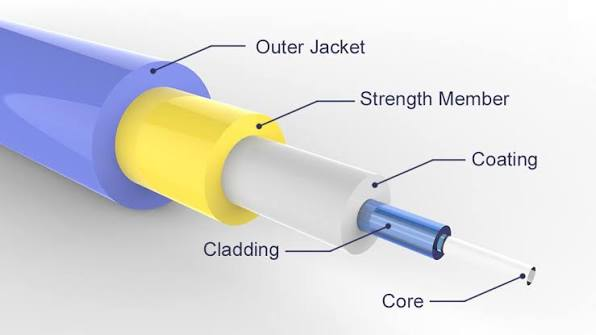
Not every network project fits neatly into a standard product catalog. A telecom operator laying cable across a mountainous region has different needs than a data center packing thousands of connections into a single room, and a smart city project threading fiber through underground conduit faces entirely different demands than a 5G base station. That’s the gap custom fiber optic cables are built to fill — engineering a cable around the project, rather than forcing the project to work around whatever’s already on the shelf.
What “Custom” Actually Means in Fiber Cable Manufacturing
Customization in fiber optic cable production isn’t a marketing label — it touches nearly every physical property of the cable itself. A manufacturer offering genuine customization typically lets you specify:
Fiber core and cladding diameter, tuned to optimize signal performance for the specific application rather than using a generic default.
Fiber count, matched precisely to network requirements instead of over- or under-provisioning capacity.
Jacket material, choosing between options like PVC, LSZH (Low Smoke Zero Halogen), or armored constructions depending on whether the cable needs to meet fire-safety codes, resist physical damage, or simply cost less for a low-risk indoor run.
Cable length, cut to the exact specification needed for an installation, cutting down on wasted material and simplifying logistics.
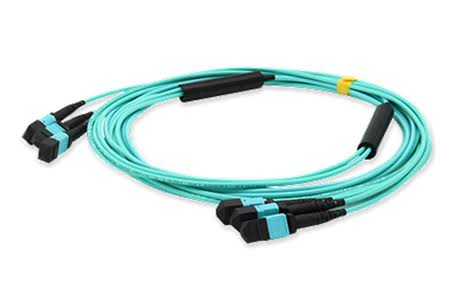
Connector type, with pre-terminated options such as SC, LC, ST, or MPO available to match whatever equipment the cable needs to plug into.
Put together, these choices mean two “custom” cables built for different projects can end up looking nothing alike, even if they’re made by the same manufacturer.
Why Off-the-Shelf Cable Often Falls Short
Standard, catalog-only fiber cable works fine when a project’s requirements happen to match what’s already in stock. The trouble starts when they don’t. A generic cable might have the wrong jacket for an outdoor deployment, more or fewer fibers than actually needed, or a connector type that doesn’t match existing equipment — any of which can mean costly rework, delays, or a cable that underperforms in the environment it’s installed in.
Custom fiber optic cables solve this by starting from the application, not the catalog page, so the finished product matches real-world conditions from day one.
Common Applications That Call for Customization
FTTH (Fiber-to-the-Home) Projects
Residential fiber rollouts need cables that balance signal integrity over long distances with enough flexibility and weatherproofing to survive years of outdoor exposure, temperature swings, and installation handling.
Smart City Infrastructure
Networks connecting sensors, cameras, and control systems across a city need cabling designed for both future bandwidth growth and resistance to signal interference, since these networks tend to stay in the ground far longer than a typical IT refresh cycle.
Data Center Connectivity
Data centers need cable configurations built around scalability — enough fiber count and bandwidth headroom to support cloud computing and storage demands that only grow over time, without requiring a full cabling overhaul at the next capacity upgrade.
5G Base Station Cabling
5G networks depend on extremely low latency and the ability to handle large data volumes reliably, which pushes cable design toward tighter performance tolerances than earlier generations of mobile infrastructure required.
What to Look for in a Custom Fiber Cable Manufacturer
Real Engineering Support, Not Just Order-Taking
A manufacturer capable of true customization should have an in-house R&D and engineering team that works through cable structure design and key specifications with you, rather than simply relaying a standard product with a different label.
A Structured Customization Process
Reliable custom cable production tends to follow a clear sequence: understanding the customer’s requirements, designing the cable structure, confirming key specifications, developing samples, testing and verifying performance, and only then moving to bulk production. Skipping steps in that process is usually where quality problems creep in.
Certifications and Quality Control
Look for manufacturers whose products carry recognized certifications such as CE, RoHS, and CPR, along with a documented quality control process spanning incoming material inspection, in-process checks, and final product testing. These aren’t just paperwork — they’re evidence that a factory has processes in place to catch problems before they reach a customer.
Track Record and Production Capacity
Years of industry experience and an established relationship with fiber suppliers tend to translate into more consistent raw material quality and fewer surprises during large orders. Production capacity matters too — a manufacturer with multiple production lines is far better positioned to meet delivery timelines on sizable custom orders than one working at the edge of its capacity.
Getting Started with a Custom Order
The most efficient custom fiber optic cable projects start with a clear picture of the application: where the cable will be installed, what environmental conditions it needs to survive, what fiber count and connector type the rest of the network requires, and roughly what volumes are involved. Bringing that information to a manufacturer upfront — rather than starting from a catalog spec sheet — is what turns “custom” from a buzzword into a cable that actually performs the way a project needs it to.
Final Thoughts
Standard fiber cable will always have its place for simple, well-defined projects, but as networks get denser, faster, and more specialized, custom fiber optic cables have become the more reliable choice for anything outside the ordinary. Choosing a manufacturer with genuine engineering capability, a disciplined production process, and solid certifications is what separates a cable that solves a problem from one that just barely fits.