
 2Q Solutions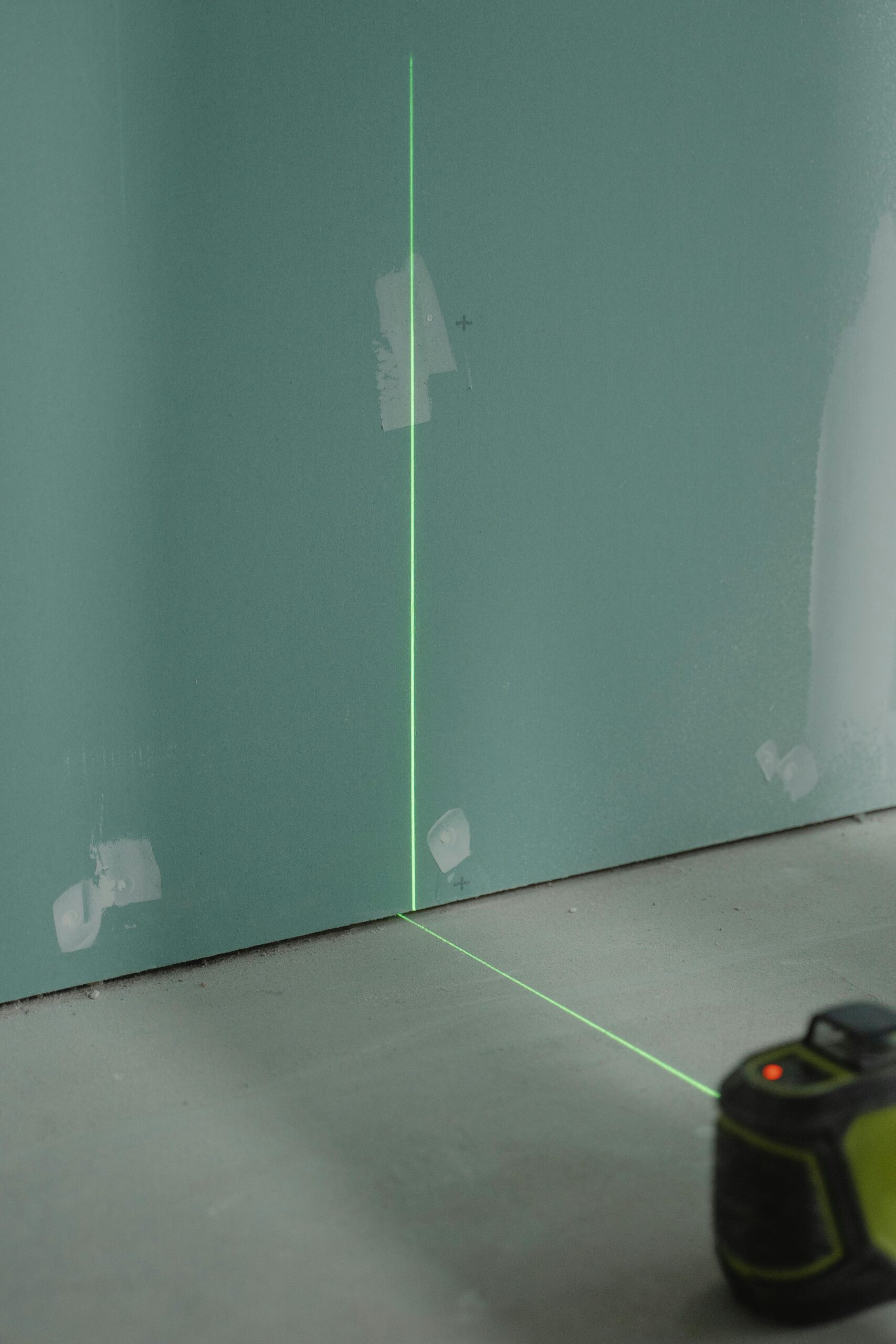
Lasers have become an essential part of modern technology, powering everything from medical devices and construction tools to scientific research and digital communication. Their ability to produce highly focused, consistent beams of light makes them uniquely suited for tasks that require exceptional accuracy. Understanding the technology behind this precision reveals why lasers continue to shape innovation across so many industries. At their core, lasers rely on carefully controlled light amplification, but the systems that support their stability, clarity, and reliability are far more intricate.
The Science of Light Amplification
The word “laser” is an acronym for Light Amplification by Stimulated Emission of Radiation. This process begins with a gain medium, such as a crystal, gas, or semiconductor, that becomes energized by an external power source. When the atoms in the medium absorb energy, they enter an excited state. As they return to their normal state, they release photons. In a laser system, these photons stimulate the release of additional photons, all traveling in the same direction and at the same wavelength. This creates a coherent beam of light, meaning the waves are perfectly aligned. Coherence is what gives lasers their sharpness and allows them to maintain focus over long distances.
Precision Through Optical Cavities
A laser’s accuracy depends heavily on its optical cavity, a chamber formed by two mirrors placed at either end of the gain medium. One mirror is fully reflective, while the other is partially reflective, allowing some of the amplified light to escape as the laser beam. As photons bounce back and forth between the mirrors, they become increasingly aligned and concentrated. This repeated reflection filters out stray wavelengths and ensures that only the most stable, uniform light escapes the cavity. The result is a beam with exceptional clarity and directionality, capable of pinpoint accuracy in both industrial and scientific applications.
Stabilization and Control Systems
Modern laser devices incorporate advanced stabilization systems to maintain consistent performance. Temperature fluctuations, vibrations, and electrical variations can all disrupt the delicate balance required for precise laser output. To counter this, many systems use thermal regulators, vibration-dampening materials, and electronic feedback loops that constantly monitor and adjust the laser’s internal conditions. These controls ensure that the beam remains steady, even in demanding environments. High-precision tools such as surveying instruments, alignment devices, and laboratory equipment depend on this stability to deliver reliable results.
Specialized Lasers for Technical Applications
Different industries require different types of lasers, each engineered for specific tasks. For example, some fields rely on highly visible beams that maintain clarity in bright or outdoor environments. In these cases, tools such as a Military Spec Green Laser may be used; not as a weapon, but as a durable, high-visibility alignment or measurement tool. Green wavelengths are easier for the human eye to detect, making them ideal for construction, engineering, and scientific demonstrations. Their rugged design allows them to perform consistently in challenging conditions, where precision and reliability are essential.
Advancements in Miniaturization and Efficiency
As technology evolves, lasers are becoming smaller, more energy-efficient, and more versatile. Semiconductor lasers, for instance, are now used in everyday devices such as barcode scanners, optical drives, and fiber-optic communication systems. These compact lasers rely on electronic components rather than large optical cavities, allowing them to fit into handheld tools and portable equipment. Meanwhile, advancements in battery technology and cooling systems have made high-precision lasers more accessible for fieldwork, research, and commercial use. This ongoing innovation continues to expand the possibilities for laser-based tools across countless industries.
Conclusion
The sharp precision of lasers is the result of carefully engineered systems that control light at the atomic level. From optical cavities and stabilization mechanisms to specialized wavelengths and compact designs, each component plays a vital role in producing the clarity and accuracy lasers are known for. As technology continues to advance, lasers will remain at the forefront of innovation, supporting industries that rely on exact measurements, dependable performance, and the remarkable capabilities of controlled light.
In today’s rapidly evolving technology landscape, staying informed about innovations like laser precision is essential for professionals and enthusiasts a like. Platforms such as Root Nation provide in-depth insights into emerging technologies, helping readers understand not just how systems work, but how they shape industries and everyday applications. By exploring expert-driven content and real-world use cases, readers can build a stronger foundation of knowledge and stay ahead in a world increasingly defined by advanced technological solutions.
Read More at USA Times