 admin
admin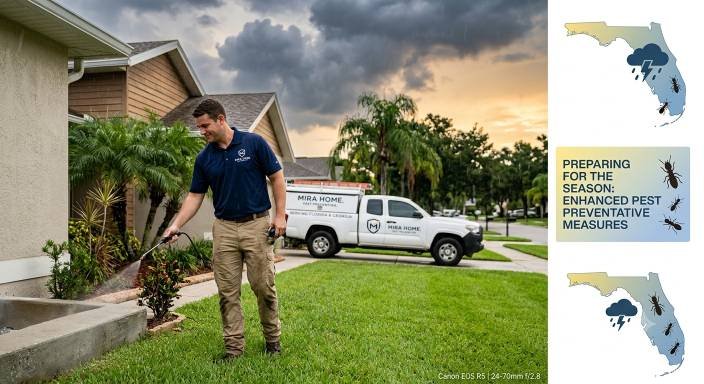
Hurricane season in the Southeast brings an unwelcome guest that shows up right on schedule: a documented, sometimes dramatic spike in mosquito activity in the weeks following a major storm. Mira Home, which provides residential pest control across Florida and Georgia, is preparing for that pattern again this year, with technicians bracing for an increase in service calls once storm systems move through. The company’s approach treats that surge as predictable rather than exceptional, which shapes how it schedules service through the back half of the season.
The Data Behind the Post-Storm Surge
A peer-reviewed study from the University of Miami examined mosquito populations in the four weeks following Hurricane Irma and found mosquito catches 7.3 to 8 times higher than the same period in the years before and after the storm. The dominant species in that surge, Culex nigripalpus, is a known carrier of West Nile virus, making up more than 70% of the post-storm catch. The Centers for Disease Control and Prevention notes that the mosquito species capable of spreading disease tend to become more prevalent roughly two weeks after a hurricane or flood, once floodwater recedes and the standing water left behind becomes a breeding ground.
That timeline matters because the immediate aftermath of a storm, when floodwater mosquitoes are at their peak, is mostly a nuisance problem rather than a disease risk. The more serious vector activity tends to build in the two to four weeks that follow, which is exactly the window when many homeowners have moved on from storm cleanup and stopped thinking about pest pressure altogether.
Why Florida and Georgia Face This Every Year
Florida and Georgia sit squarely in the path of the Atlantic hurricane season, which runs from June through November and typically peaks between August and October. The same conditions that make hurricanes dangerous, heavy rainfall and widespread flooding, are also what create ideal mosquito breeding habitat almost overnight. Clogged gutters, tarps and debris that collect water, and low-lying yards that do not drain properly all become breeding sites within days of a storm passing through.
West Nile virus activity was already elevated nationally last year, with more than 2,000 human cases confirmed across over 40 states by the time the season wound down, a reminder that the post-storm mosquito spike is not purely an inconvenience for the properties it affects.
How Mira Home Prepares for the Season
Mira Home’s mosquito control service is built around treating both stages of the mosquito life cycle rather than just the adults a homeowner can see. Technicians treat the shaded, humid areas around a property, under decks, in dense shrubs, along fence lines, where adult mosquitoes rest during the day, while also applying a targeted larvicide to standing water that cannot easily be drained, such as ponds or low spots that hold water after rain. A typical treatment holds for three to four weeks before it needs to be reapplied, which is part of why the company structures mosquito control as a recurring seasonal service rather than a single visit.
That treatment cadence lines up closely with the case for year-round coverage that the post-storm window makes plain. Heading into peak hurricane season, Mira Home is encouraging Florida and Georgia homeowners already on a seasonal mosquito plan to keep visits on schedule through October rather than pausing service once the immediate storm risk passes, since the CDC’s two-week disease-vector window falls well within that stretch.
Safety remains part of the conversation for households with kids and pets. Treatments are applied according to product label directions, with the general guidance being to keep children and pets indoors until everything dries, typically 30 to 45 minutes. The larvicide used on standing water is targeted specifically to the water itself rather than broadcast across a yard, which keeps treatment focused on the breeding sites doing the most to drive the post-storm surge.
What Homeowners Can Do Before and After a Storm
Ahead of hurricane season, the most effective homeowner action does not require any special equipment: walking the property to identify anything that could hold water once heavy rain arrives. Clogged gutters, flowerpot saucers, tarps, unused containers, and low spots in the yard are the most common overlooked breeding sites, and clearing them ahead of a storm reduces how much habitat is available once flooding occurs.
After a storm passes, the same walk-through matters even more, since debris and new low spots created by wind and flooding often introduce breeding sites that were not there before. Mira Home’s guidance to homeowners in its Florida and Georgia service areas is to treat storm cleanup and mosquito prevention as the same task rather than two separate ones, since clearing storm debris promptly does double duty by removing standing water before it becomes a breeding ground.
Storm season also tends to bring pest control providers into closer contact with the communities they serve, since recovery periods put a premium on responsiveness. Mira Home has previously pointed to the company’s community engagement, including large-scale employee volunteer projects, as evidence that its service model is built around showing up when local conditions demand it rather than treating any single market as an afterthought. That posture matters most in the weeks after a hurricane, when homeowners dealing with storm damage have limited bandwidth to chase down a provider and need pest prevention handled as a known, scheduled part of recovery rather than one more thing to arrange.
Looking Ahead to Peak Season
With the Atlantic hurricane season’s most active months still ahead, Mira Home’s approach reflects a straightforward read of the data: the mosquito problem that follows a hurricane is not random, it is predictable, and it responds well to preparation. For homeowners in Florida and Georgia, that means the weeks immediately after a storm passes are not the time to let pest control lapse, even when there are more visible repairs competing for attention. What Mira Home clients have said about long-term service suggests that a provider built around scheduled, recurring service is, by design, better positioned to keep that window covered than a homeowner trying to remember to call once cleanup is finally underway.