 Backlinks Hub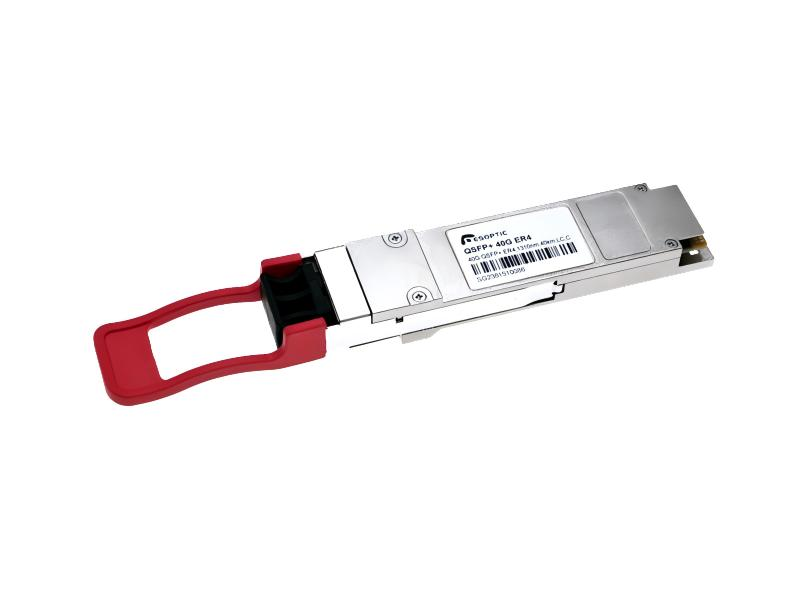
As modern networks continue to demand higher bandwidth and longer transmission distances, 40-gigabit Ethernet technology remains an important solution for backbone and long-reach connectivity. In many network deployments, 40G QSFP+ modules are widely used to support high-speed data transmission between switches, routers, and data centers. These modules provide a balance between performance and scalability, enabling networks to handle growing traffic demands without dramatically increasing infrastructure complexity.
Among different types of 40G QSFP+ modules, the 40GBASE-ER4 optical transceiver is specifically designed for long-distance transmission over single-mode fiber. Operating around the 1310 nm wavelength range, this module uses wavelength division multiplexing technology to combine four optical lanes into a single duplex fiber link. With this design, the module can support transmission distances of up to 40 kilometers, making it suitable for applications such as data center interconnection, campus network backbones, and metropolitan area networks.
Although 40G QSFP+ modules such as ER4 are engineered to support long-reach connectivity, the actual transmission distance that can be achieved in a real network environment depends on several technical and environmental factors. The performance of the fiber infrastructure, the optical power characteristics of the module, and the overall link design can all influence how far the signal can travel while maintaining stable communication. Understanding these factors is essential for designing reliable long-distance optical links.

Optical Power and Link Budget
One of the most critical factors affecting the transmission distance of a 40G QSFP+ ER4 module is the optical power budget. The power budget represents the allowable difference between the transmitter’s output power and the minimum optical power required by the receiver to detect the signal correctly. As the optical signal travels through the fiber, it gradually loses strength due to attenuation and connector losses. If the signal becomes too weak before reaching the receiver, the link may experience errors or fail entirely.
For long-distance optical modules such as ER4, the transmitter typically provides higher optical output power compared with short-reach modules. This stronger signal helps compensate for the attenuation that occurs over long fiber spans. However, the total distance that can be supported ultimately depends on whether the overall loss of the link remains within the module’s specified power budget. Network engineers often calculate this budget during the design phase to ensure that the optical signal will remain within an acceptable range throughout the entire transmission path.
Fiber Type and Quality
The type and quality of the optical fiber used in the network also play a significant role in determining transmission distance. 40GBASE-ER4 modules are designed to operate with single-mode fiber, which is optimized for long-distance transmission due to its lower attenuation and minimal signal dispersion. Single-mode fiber allows light signals to travel over much longer distances compared with multimode fiber, making it the preferred medium for long-reach optical links.
In addition to fiber type, the condition of the fiber infrastructure can strongly affect signal performance. Over time, fiber cables may develop microbends, splicing imperfections, or contamination at connection points. These issues can increase signal attenuation and reduce the effective reach of the optical link. Maintaining high-quality fiber installations and ensuring proper connector cleaning can help minimize signal degradation and allow the module to achieve its maximum supported distance.
Connector and Splicing Loss
Optical connectors and splices introduce additional signal loss that accumulates along the transmission path. Each connection point between two fiber segments slightly reduces the optical signal power due to insertion loss. In short-distance networks, these losses may be negligible, but in long-distance links they can significantly affect the overall link budget.
When multiple connectors, patch panels, or splicing points exist between the transmitter and receiver, the cumulative loss can become substantial. Even small losses at each connection point may eventually push the total link loss beyond the module’s allowable range. Careful network design that minimizes unnecessary connection points and uses high-quality components can help maintain stronger signal levels and extend the effective transmission distance.
Fiber Attenuation and Environmental Conditions
Another important factor influencing transmission distance is the attenuation characteristic of the fiber itself. Optical signals gradually lose power as they propagate through the fiber due to absorption and scattering effects within the glass material. Although single-mode fiber is designed to minimize these losses, attenuation still increases proportionally with distance.
Environmental conditions can also influence fiber attenuation. Temperature variations, mechanical stress, or improper cable management may introduce additional losses along the fiber path. In outdoor or long-haul installations, environmental factors such as humidity or physical strain on the cable infrastructure can further impact signal stability. Ensuring proper installation practices and protecting fiber cables from environmental stress can help maintain consistent optical performance over long distances.
Module Performance and Temperature Stability
The internal performance characteristics of the optical module itself can also influence transmission distance. Long-reach modules like 40GBASE-ER4 rely on multiple optical components, including lasers, multiplexers, and receivers, to transmit and receive high-speed signals. Variations in these components may slightly affect the optical output power and receiver sensitivity.
Temperature conditions within the network equipment can also impact module performance. Optical components may experience changes in operating characteristics when exposed to excessive heat. If the module operates outside its recommended temperature range, the stability of the transmitted signal may decrease, which could reduce the effective reach of the link. Maintaining proper cooling and ventilation within network equipment helps ensure consistent module performance
Network Design and Link Margin
The overall design of the optical link is another important factor in determining transmission distance. Engineers typically include a link margin when designing long-distance connections to account for unexpected losses or future changes in the network. This margin ensures that the link will remain stable even if minor degradations occur over time.
For example, dust accumulation on connectors, aging fiber infrastructure, or minor changes in environmental conditions may gradually increase signal loss. By incorporating a sufficient link margin during the planning stage, network designers can ensure that the optical link continues to operate reliably even as these factors evolve. Proper link design therefore plays a key role in maximizing the practical transmission distance of 40G QSFP+ ER4 modules.
Conclusion
The transmission distance of 40G QSFP+ ER4 optical modules is influenced by a combination of technical and environmental factors. While these modules are designed to support long-distance communication of up to 40 kilometers over single-mode fiber, the actual performance of a network link depends on how well these factors are managed.
Optical power budget, fiber quality, connector losses, environmental conditions, and module performance all contribute to the stability and reach of the optical signal. By carefully considering these elements during network planning and deployment, engineers can ensure that long-distance 40G links operate efficiently and reliably. With proper design and maintenance, 40GBASE-ER4 modules can provide dependable high-speed connectivity across large campuses, metropolitan networks, and other long-distance networking environments.