 2Q Solutions
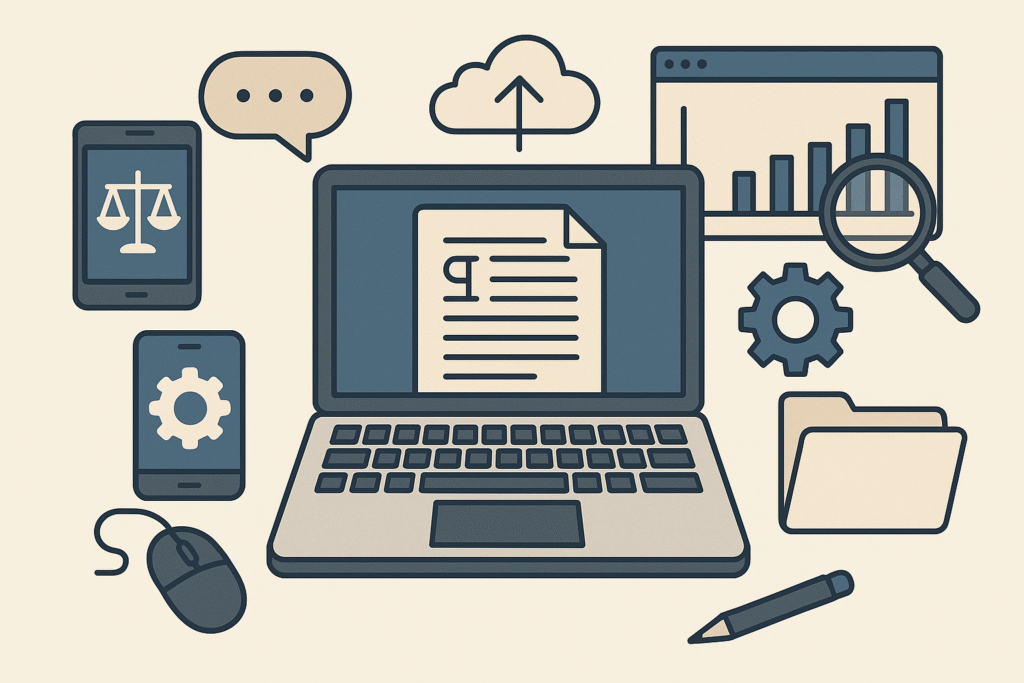
For most of human history, legal documentation required lawyers, notaries, and physical paperwork. Contracts were drafted by hand or typewriter, printed, mailed, and signed in person. Copies were stored in filing cabinets. Changes meant reprinting entire documents. This process was slow, expensive, and inaccessible to ordinary people. Today, digital technology is fundamentally changing how legal paperwork works, putting document creation, signing, and storage into the hands of anyone with internet access.
The Traditional Legal Paperwork Problem
For decades, the process of creating a legal document was gatekept by lawyers and law firms. If you needed a lease, you hired a lawyer or used a generic form from a bookstore and hoped it was correct. If you needed a contract, you paid hundreds of dollars for consultation and drafting. If you needed multiple documents, costs multiplied. Even small business owners and families with modest needs felt the weight of these expenses.
The result was predictable. Many people skipped legal documents altogether, relying on verbal agreements or informal arrangements. Others used outdated templates or forms that did not match current law or their specific situation. Disputes arose because people did not have proper documentation. Family conflicts emerged because no one had created a will.
This system worked fine for wealthy people who could afford lawyers. For everyone else, it created a two-tiered legal landscape where the rich had comprehensive legal protection and ordinary people operated in a gray zone of uncertainty.
How the Internet Changed Legal Document Creation
The internet disrupted this model by making information and templates widely available. Suddenly, people could find sample leases, contracts, and agreements online. They could read about what a legal document should contain. This democratized access to legal knowledge, but it did not solve the main problem: creating a legally sound, customized document is complex and error prone for non-lawyers.
Generic templates found online often miss state specific requirements or fail to address important scenarios. Using the wrong template in the wrong state can create documents that are unenforceable or fail to protect your rights. People still needed guidance, but they did not have access to affordable lawyers.
Web-Based Guided Document Generation
The next evolution came with platforms designed specifically to guide people through creating legal documents. Rather than asking users to navigate complex legal language, these platforms use plain-language questionnaires. Users answer straightforward questions about their situation, and software generates customized documents tailored to their state and circumstances.
This approach solves multiple problems. First, it ensures documents include all required elements. If a state requires specific language in a lease or deed, the software automatically includes it. Second, it customizes language to match the user’s actual situation rather than forcing them to adapt a generic template. Third, it makes the process fast and affordable.
These platforms operate like interactive documents rather than static forms. As users answer questions, the platform adjusts what appears next. If someone indicates they are renting out a property in California, the platform shows California specific tenant protections and security deposit requirements. Someone renting in Texas sees different rules.
Electronic Signatures and Digital Execution
Technology also solved the signature problem. For decades, contracts had to be signed in person or by mail, which meant delays and logistical complications. Electronic signature technology, recognized by federal law under the E-SIGN Act and by state laws under the Uniform Electronic Transactions Act, allows parties to sign documents digitally.
This innovation eliminates printing, mailing, and scanning delays. Both parties can sign from home. The entire transaction happens in minutes instead of weeks. Signatures are legally valid and enforceable in court.
Secure Digital Storage and Retrieval
Historically, legal documents were stored in filing cabinets or safe deposit boxes. Finding them later meant searching through physical files. Sharing documents with lawyers or family members required copying and mailing.
Today, documents can be stored in encrypted cloud systems accessible from anywhere. Users can organize documents by category, search for specific agreements, and share access with trusted family members or professionals. If a dispute arises years later, retrieving the original signed document is instantaneous rather than requiring a search through dusty files.
This creates another benefit: document permanence. Paper documents fade, get lost, or are accidentally thrown away. Digital documents with automatic backups are virtually permanent.
Mobile Accessibility and Convenience
Modern platforms work on mobile devices as well as computers. Someone can create a lease from their phone while showing property to a potential tenant. A parent can generate a child travel consent form the night before a trip. A freelancer can create a service agreement in minutes before a client meeting.
This mobile accessibility removes friction from legal document creation. People can complete necessary paperwork whenever convenient rather than scheduling a time to go to a lawyer’s office or sit at a computer.
Customization at Scale
Another technological advantage is the ability to customize documents repeatedly without significant effort. A landlord who manages multiple properties can generate new leases for each property in minutes. A freelancer can create service agreements tailored to each client. A parent can generate multiple child medical and travel consents for different scenarios.
Without technology, each new document required starting from scratch. With guided platforms, the customization process is streamlined. Users answer the relevant questions once and generate a new document.
Integration With Legal Ecosystems
Some platforms now integrate with broader legal ecosystems. Notarization can be handled online in many states. Ziji Legal Forms and similar services provide templates across multiple document types, allowing users to create complementary documents like wills, residential leases, employment contracts, and financial agreements all from one platform.
This integration means someone can create a comprehensive legal foundation in one place rather than hunting for different resources for different document types. A new landlord can create a lease, a move-in inspection checklist, and security deposit documentation all from one platform.
Remaining Limitations
Despite technological advances, complex legal situations still require lawyers. Litigation, significant intellectual property matters, or high-value transactions with competing interests benefit from professional legal expertise. Technology handles routine documents well, but it cannot replace lawyer judgment in complicated scenarios.
Additionally, technology requires that people understand their situation well enough to answer questions accurately. Someone confused about whether they are an employee or independent contractor cannot rely on a platform to figure that out. The saying “garbage in, garbage out” applies to legal documents as much as software.
The Democratization Effect
The cumulative impact of these technologies is democratization of legal document creation. Someone starting a small business can create employment contracts, service agreements, and independent contractor agreements without hiring an expensive business lawyer. A parent can create a child medical consent form for babysitters in minutes. A landlord can create a professional lease without legal assistance.
This does not replace the legal profession. Rather, it frees lawyers to focus on complex matters while routine documents are handled through technology. It allows people with limited budgets to protect themselves legally.
Conclusion
Technology has fundamentally transformed legal paperwork from an expensive, gatekept service into an accessible tool for everyday people. Guided web-based platforms, electronic signatures, and secure digital storage have made legal document creation faster, cheaper, and more reliable than ever before.
For routine legal needs, technology provides solutions that work well. For complex situations, lawyers remain essential. The future of legal documentation likely involves a hybrid approach where technology handles straightforward matters and lawyers focus on complicated cases. This allows everyone to access the legal protection they need, regardless of income or resources.
Read More USA Times