 Backlinks Hub
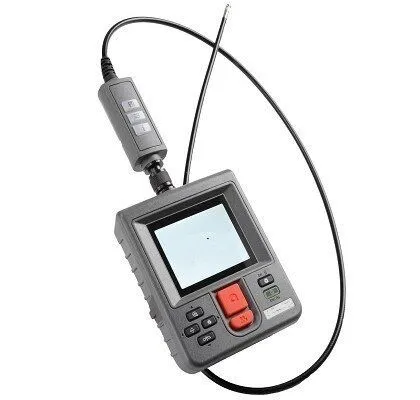
Corrosion and pitting don’t usually announce themselves with dramatic failures. They start small—discolored patches, tiny pits, roughened surfaces—and quietly grow until a component is weakened, leaks develop, or a critical part has to come out of service early. A quality borescope is one of the most effective ways to spot this damage before it becomes a costly problem.
The challenge is knowing what you’re looking at. Through a camera, corrosion and pitting can sometimes resemble deposits, staining, or simple manufacturing marks. Learning to recognize the visual “signatures” of these issues is key to making better calls during internal inspections.
Why corrosion and pitting are easy to miss
Corrosion is often subtle in its early stages. It may show up as:
- Slight dulling of previously smooth surfaces
- Minor color changes (brown, reddish, gray, or black stains)
- Gentle texturing that doesn’t immediately scream “damage”
Pitting is even trickier. Individual pits can be very small but deep. A surface might look mostly intact at first glance, especially on video, while hiding significant local metal loss in a few concentrated spots.
In many inspection-heavy industries—aviation, power generation, oil and gas, chemical processing, and more—these small early signs often determine whether you can plan a controlled maintenance window or end up reacting to a surprise failure later. That’s why corrosion and pitting need deliberate, methodical inspection, not just a quick sweep.
What corrosion looks like through a borescope
General (uniform) corrosion
Uniform corrosion tends to attack broad areas of the surface at a similar rate. Through a borescope, you’ll often see:
- A matte or “faded” appearance where the surface used to be smooth and shiny
- Color changes that follow the flow path or exposure zone
- Soft, blended edges rather than sharp, localized marks
This type of corrosion is usually easier to spot, but it’s still worth documenting carefully so engineers can track how fast it’s progressing between inspections.
Localized pitting
Pitting corrosion is more dangerous relative to how small it looks. Typical visual cues include:
- Small, sharply defined dark spots or cavities
- Pinpoint or crater-like depressions in otherwise sound metal
- Clusters or lines of pits following welds, joints, or stagnant-flow regions
Lighting and angle are critical here. A shallow viewing angle can throw shadows across pits, making them “pop” in the image. A straight-on view may make them look less severe than they really are.
Crevice and under-deposit corrosion
Some corrosion hides in tight gaps or under deposits. With a borescope, you may notice:
- Rust or discoloration creeping out from joints, overlaps, or gasket areas
- Corrosion products emerging around scale, sludge, or other buildup
- Sharp changes in appearance where two surfaces meet or where deposits end
These areas often deserve extra attention and more frequent follow-up inspections because they’re hard to clean completely and easy to overlook.
Using borescope features to spot corrosion more reliably
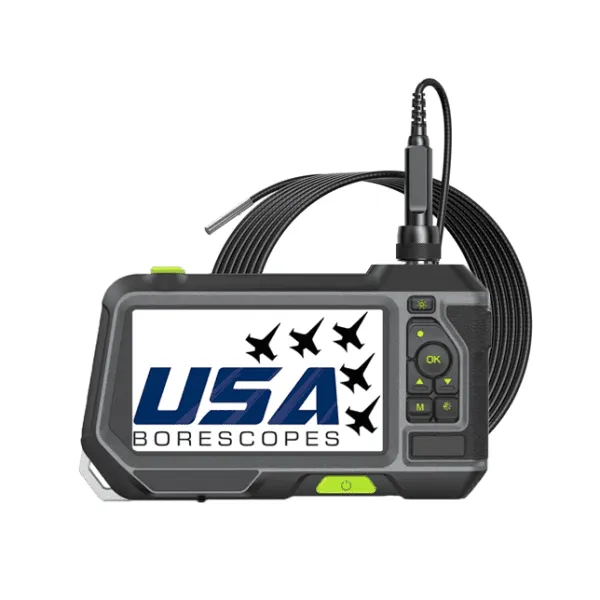
Use lighting to reveal texture
Lighting isn’t just about making the image bright enough—it’s about revealing surface detail. To highlight corrosion and pitting:
- Reduce brightness slightly on shiny metals to avoid washing out fine features.
- Move the tip so light strikes the surface at a shallow angle, casting small shadows in pits and rough areas.
- Experiment with distance: sometimes pulling back a little improves contrast.
Strong, controllable lighting is one of the most important reasons many sectors lean on professional remote visual inspection solutions designed for demanding industries and applications.
Use articulation and probe rotation
Don’t judge a suspect area from just one angle. Use articulation and gentle rotation to:
- View pits from the side to better understand depth and shape
- Check whether stains are just surface discoloration or associated with metal loss
- Look along weld toes and joints where corrosion often starts
Subtle changes in the way light reflects off the damaged area can tell you a lot about how severe it is.
Compare with known “good” areas
Whenever possible, compare suspicious regions to nearby surfaces that are clearly in better condition:
- Same material, different area
- Upstream vs. downstream of a suspected corrosion zone
- Similar features (for example, two welds or two bends)
Side-by-side visual comparison in the same session is often easier and more reliable than trying to remember what a component looked like during the last inspection.
Common mistakes when assessing corrosion and pitting by borescope
Confusing deposits with damage
Sludge, scale, or process deposits can look dramatic but may not always indicate severe metal loss underneath. On the other hand, wiping away deposits (where allowed) and seeing pits or heavy roughness beneath is a clear sign of more serious corrosion.
Over-relying on single images
A single still image can be misleading if it’s poorly lit or taken at an odd angle. Whenever you spot potential corrosion:
- Capture multiple images from different angles and distances
- Record short video clips showing how the area looks as you move
- Make sure at least one view includes clear surrounding features for context
This richer record gives engineers and reliability teams a much better basis for assessment.
Ignoring gradual changes in image quality
If your borescope has slowly lost clarity or lighting performance, subtle corrosion features become harder to see. What looked obvious when the tool was new may be easy to miss a year later. Regular cleaning, post-use checks, and timely professional evaluation through dedicated inspection equipment services help keep image quality where it needs to be for reliable corrosion detection.
Turning borescope findings into better decisions
Spotting corrosion and pitting is only step one. The next steps—documentation and follow-up—are where you turn visual evidence into real value:
- Note location details (distance from reference points, clock position, section or stage).
- Capture both detailed close-ups and wider context shots.
- Compare with previous inspection records to estimate how quickly damage is progressing.
Those details help engineers decide whether to monitor, repair, or replace—and they support stronger cases in warranty discussions, reliability reviews, and safety assessments.
How USA Borescopes can support corrosion-focused inspections
Identifying corrosion and pitting accurately depends on three things: the right equipment, the right technique, and the right support when tools start to wear. USA Borescopes focuses on remote visual inspection solutions and understands how internal corrosion affects engines, piping, vessels, and other critical assets. Their background and customer-focused approach are outlined on the company’s About Us page.
If you want to improve how your team detects and documents corrosion and pitting—whether that means choosing more suitable borescopes, planning repair and evaluation for existing tools, or tightening inspection practices—it helps to work with specialists who live in this world every day. To discuss your applications, review your current setup, or get practical recommendations tailored to your environment, contact USA Borescopes today.
About the Author
This guest article was written by a technical content writer who specializes in inspection and reliability topics. They work with equipment manufacturers and asset owners to turn real-world field experience into practical guidance that helps technicians and engineers spot corrosion earlier, make better decisions, and extend the life of critical components.